
🏃♂️ 1.5 Mile VO₂ Max Test Calculator
Calculate your cardiovascular fitness using the scientifically validated 1.5-mile run test with gender-specific regression equations
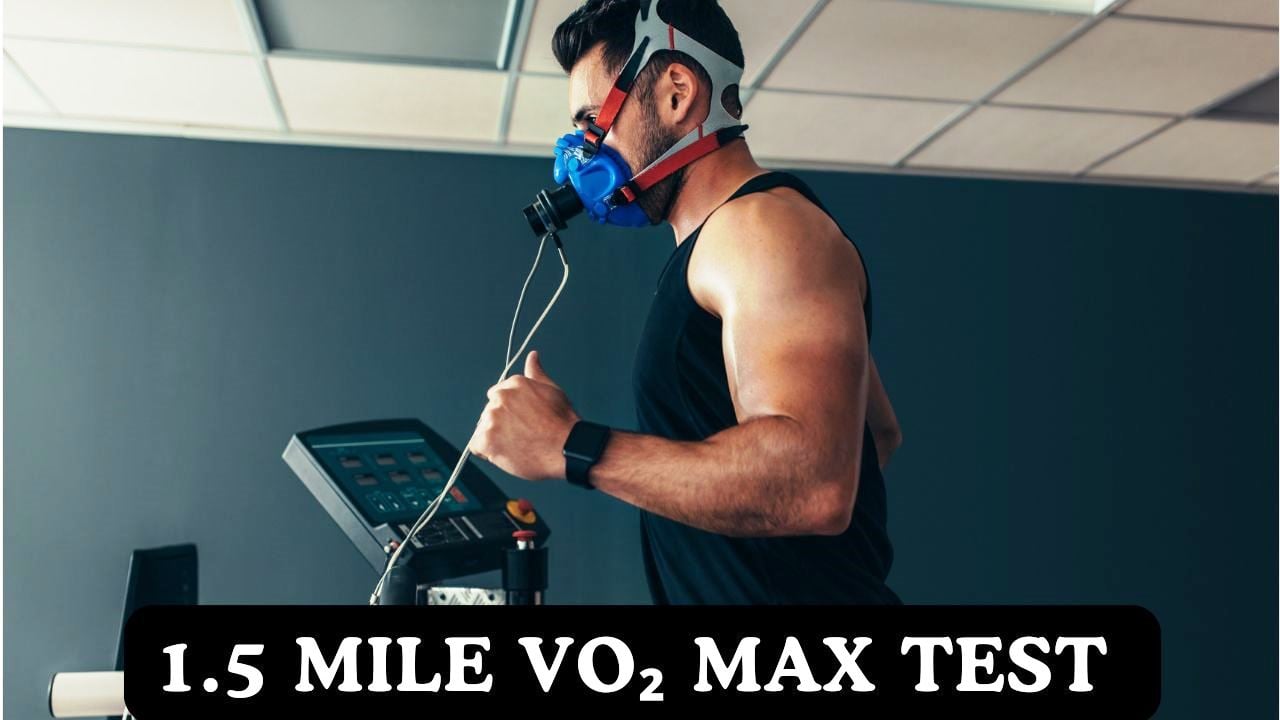
1.5 Mile Run VO₂ Max Test
The 1.5-mile run test is a scientifically validated field test for predicting VO₂ max using gender-specific regression equations. Research by McNaughton et al. (1998) demonstrates strong correlation (r=0.87) between 1.5-mile run performance and actual VO₂ max measurements, making it one of the most accurate field tests available.
Scientific Formulas
Gender-specific regression equations provide accurate VO₂ max predictions.
Male: VO₂max = 108.844 – (0.1636 × Weight_kg) – (1.438 × Time_min) – (0.1928 × Age)
Female: VO₂max = 100.434 – (0.1636 × Weight_kg) – (1.438 × Time_min) – (0.1928 × Age)
Validated research confirms these equations’ accuracy.
Test Protocol
Complete 1.5 miles (2.4 km) as quickly as possible on a flat, measured course. Proper warm-up and pacing strategy are essential for accurate results. The test requires maximal effort and should only be performed by individuals cleared for vigorous exercise.
Accuracy & Validity
Studies show 85-90% correlation with laboratory VO₂ max testing. Comparative research demonstrates the 1.5-mile run as the most accurate field test, superior to Cooper 12-minute run and shuttle tests.
Regression Equation Details
Male Formula
VO₂max = 108.844 - (0.1636 × BW_kg) - (1.438 × T_min) - (0.1928 × Age)
Variables:
- BW_kg = Body weight in kilograms
- T_min = Run time in minutes (decimal)
- Age = Age in years
Female Formula
VO₂max = 100.434 - (0.1636 × BW_kg) - (1.438 × T_min) - (0.1928 × Age)
Key Differences:
- Lower baseline constant (100.434 vs 108.844)
- Same weight, time, and age coefficients
- Accounts for physiological differences
Calculation Example
Subject: 30-year-old male, 75 kg, 12:30 run time
Calculation:
VO₂max = 108.844 – (0.1636 × 75) – (1.438 × 12.5) – (0.1928 × 30)
VO₂max = 108.844 – 12.27 – 17.975 – 5.784
Result: VO₂max = 72.8 ml/kg/min
VO₂ Max Fitness Standards
| Age Group | Gender | Poor | Fair | Average | Good | Excellent |
|---|---|---|---|---|---|---|
| 20-29 | Male | <25 | 25-33 | 34-42 | 43-52 | >52 |
| Female | <23 | 23-28 | 29-34 | 35-44 | >44 | |
| 30-39 | Male | <23 | 23-30 | 31-39 | 40-48 | >48 |
| Female | <20 | 20-25 | 26-31 | 32-40 | >40 | |
| 40-49 | Male | <20 | 20-27 | 28-35 | 36-44 | >44 |
| Female | <17 | 17-22 | 23-28 | 29-36 | >36 | |
| 50-59 | Male | <18 | 18-24 | 25-32 | 33-40 | >40 |
| Female | <15 | 15-20 | 21-25 | 26-32 | >32 | |
| 60+ | Male | <16 | 16-22 | 23-28 | 29-36 | >36 |
| Female | <13 | 13-17 | 18-23 | 24-30 | >30 |
Field Test Comparison
| Test Type | Duration | Correlation with VO₂ Max | Advantages | Limitations |
|---|---|---|---|---|
| 1.5 Mile Run | 6-25 minutes | r = 0.87 | High accuracy, standardized | Requires maximal effort |
| Cooper 12-min Run | 12 minutes | r = 0.87 | Fixed time duration | Pacing challenges |
| 20m Shuttle Run | 5-15 minutes | r = 0.82 | Progressive intensity | Lower correlation |
| Submaximal Cycle | 6-12 minutes | r = 0.85 | Safer for at-risk populations | Requires equipment |

Manish is a NASM-certified fitness and nutrition coach with over 10 years of experience in weight lifting and fat loss fitness coaching. He specializes in gym-based training and has a lot of knowledge about exercise, lifting technique, biomechanics, and more.
Through “Fit Life Regime,” he generously shares the insights he’s gained over a decade in the field. His goal is to equip others with the knowledge to start their own fitness journey.