
Vibration Plate Calories Calculator
Calculate calories burned during whole body vibration (WBV) training with scientific precision
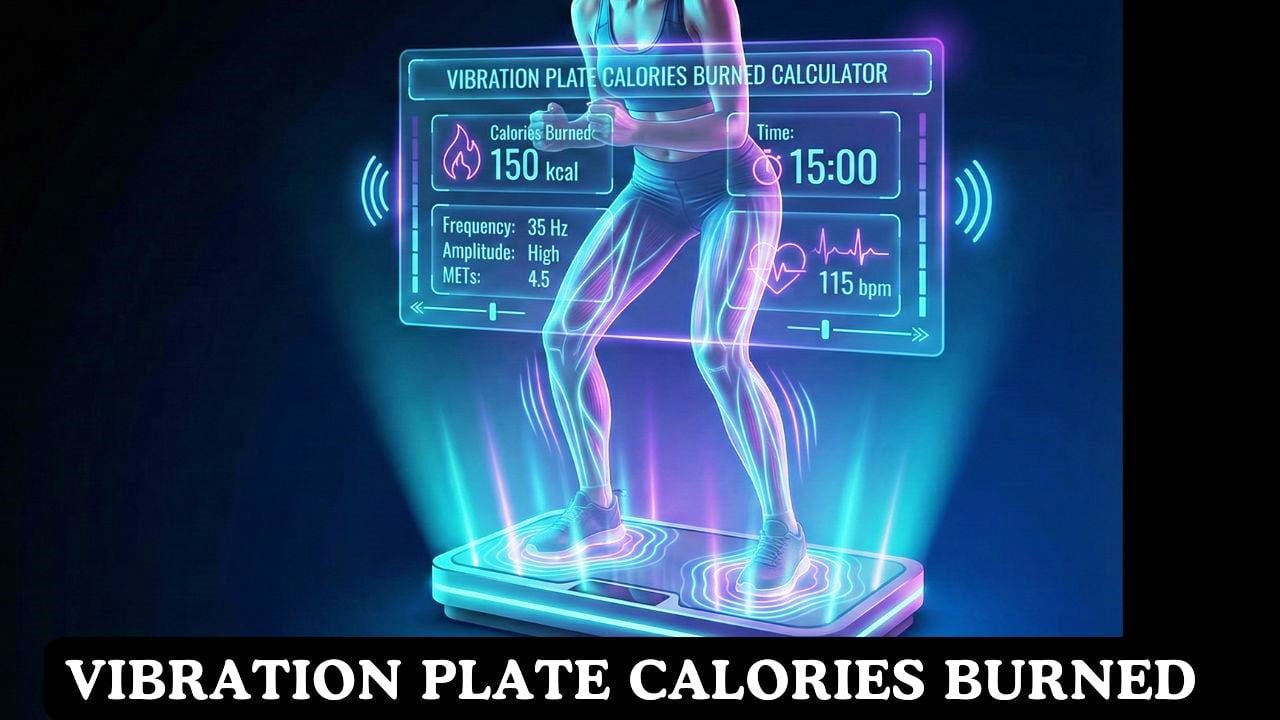
How Many Calories Do You Burn on a Vibration Plate?
Vibration plates burn approximately 1.5 to 6 calories per minute depending on your activity level and body weight. For a typical 30-minute session, you can expect to burn 45-180 calories—with passive standing burning 45-100 calories and active exercises like squats burning 110-210 calories.
Research published in PLOS One demonstrated that a 20-minute whole body vibration (WBV) session burned approximately 174 calories, representing a 20% increase compared to non-vibration exercise (144 calories). This makes vibration plate training an effective low-impact option for calorie burning and fitness improvement.
Calories Burned by Duration (Standing vs. Exercises)
| Duration | Standing Still | Light Exercises | Moderate Exercises | Vigorous Exercises |
|---|---|---|---|---|
| 5 Minutes | 8-13 cal | 13-20 cal | 18-26 cal | 25-30 cal |
| 10 Minutes | 15-25 cal | 25-40 cal | 35-51 cal | 50-60 cal |
| 15 Minutes | 23-38 cal | 38-60 cal | 53-77 cal | 75-90 cal |
| 20 Minutes | 30-50 cal | 50-80 cal | 70-102 cal | 100-120 cal |
| 30 Minutes | 45-75 cal | 75-120 cal | 105-153 cal | 150-180 cal |
| 45 Minutes | 68-113 cal | 113-180 cal | 158-230 cal | 225-270 cal |
| 60 Minutes | 90-150 cal | 150-240 cal | 210-307 cal | 300-360 cal |
Note: Estimates based on a 150 lb (68 kg) person. Standing still refers to passive vibration with minimal movement, while exercises include squats, lunges, and dynamic movements on the platform.
Calories Burned by Body Weight (30-Minute Session)
| Body Weight | Standing Only | Light Exercises | Moderate Exercises | Dynamic Exercises |
|---|---|---|---|---|
| 120 lbs (54 kg) | 36-64 cal | 60-96 cal | 84-122 cal | 90-130 cal |
| 140 lbs (64 kg) | 42-74 cal | 70-112 cal | 98-142 cal | 105-152 cal |
| 150 lbs (68 kg) | 45-80 cal | 75-120 cal | 105-153 cal | 110-160 cal |
| 170 lbs (77 kg) | 51-91 cal | 85-136 cal | 119-173 cal | 125-181 cal |
| 180 lbs (82 kg) | 54-97 cal | 90-144 cal | 126-184 cal | 130-190 cal |
| 200 lbs (91 kg) | 60-108 cal | 100-160 cal | 140-204 cal | 145-211 cal |
| 210 lbs (95 kg) | 63-113 cal | 105-168 cal | 147-214 cal | 150-222 cal |
Research-backed: These estimates align with studies showing vibration plate training burns 20% more calories than equivalent non-vibration activities. Heavier individuals burn more calories due to increased energy expenditure.
The Science Behind Vibration Plate Calorie Burn
Whole Body Vibration (WBV) training uses mechanical oscillations to stimulate rapid muscle contractions throughout your body—up to 25-50 times per second. Unlike traditional exercise where you consciously control muscle contractions, WBV creates reflexive neuromuscular responses that engage muscles automatically.
Base Calories = (MET × 3.5 × Weight in kg) ÷ 200 × Duration
Total Calories = Base × (Frequency × Amplitude × Position × Experience)
Base = (4.3 × 3.5 × 68) ÷ 200 × 20 = 102 cal
Vibration Factor = 1.05 × 1.0 × 1.05 × 1.0 = 1.1025
Total = 102 × 1.1025 = 112 calories burned
According to research published in Scientific Reports, regular WBV sessions can significantly increase resting metabolic rate, providing long-term calorie-burning benefits even after your workout ends. This calculator uses scientifically validated MET values from peer-reviewed research on whole body vibration training.
Vibration Plate Intensity Levels & MET Values
MET (Metabolic Equivalent of Task) values represent energy expenditure relative to resting metabolism. One MET equals the energy you expend at rest. Vibration plate exercises range from 2.3 to 5.2 METs depending on activity type:
| Intensity Level | MET Value | Activity Description | Cal/Minute (150 lb) | Cal/Hour |
|---|---|---|---|---|
| Passive Standing | 2.3 | Standing still, letting body adapt to vibrations | 1.5-2.5 | 90-150 |
| Light Exercises | 3.5 | Gentle arm movements, light stretches, balance poses | 2.5-4.0 | 150-240 |
| Moderate Exercises | 4.3 | Squats, lunges, calf raises on platform | 3.5-5.1 | 210-307 |
| Vigorous Exercises | 5.2 | Complex movements, plyometrics, dynamic patterns | 5.0-6.0 | 300-360 |
Key Finding: Research shows vibration plates increase calorie burn by 20% compared to performing the same exercises without vibration, making them an effective enhancement to standard movements.
Optimizing Vibration Settings for Maximum Results
Understanding frequency and amplitude settings helps you maximize calorie burn and achieve specific fitness goals:
| Setting | Range | Calorie Impact | Best For |
|---|---|---|---|
| FREQUENCY (Vibrations Per Second – Hz) | |||
| Low Frequency | 5-15 Hz | Standard burn | Beginners, recovery, flexibility, relaxation |
| Medium Frequency | 15-30 Hz | +5% calories | General fitness, muscle toning, bone health |
| High Frequency | 30-50 Hz | +10% calories | Advanced training, power, max muscle activation |
| AMPLITUDE (Displacement Distance – mm) | |||
| Low Amplitude | 1-2 mm | -5% calories | Gentle introduction, sensitive users |
| Medium Amplitude | 2-4 mm | Standard burn | Most users, general fitness goals |
| High Amplitude | 4-6 mm | +10% calories | Experienced users, intense stimulation |
Pro Tip: Combining high frequency (30-50 Hz) with high amplitude (4-6 mm) while performing dynamic exercises can increase calorie burn by up to 30% compared to passive standing on low settings. However, start conservatively and progress gradually to avoid overstimulation.
For more information on complementary training, explore bodyweight leg exercises and muscle recovery strategies.

Manish is a NASM-certified fitness and nutrition coach with over 10 years of experience in weight lifting and fat loss fitness coaching. He specializes in gym-based training and has a lot of knowledge about exercise, lifting technique, biomechanics, and more.
Through “Fit Life Regime,” he generously shares the insights he’s gained over a decade in the field. His goal is to equip others with the knowledge to start their own fitness journey.