
Calories Burned While Cleaning Calculator
Calculate energy expenditure for household chores using validated MET values
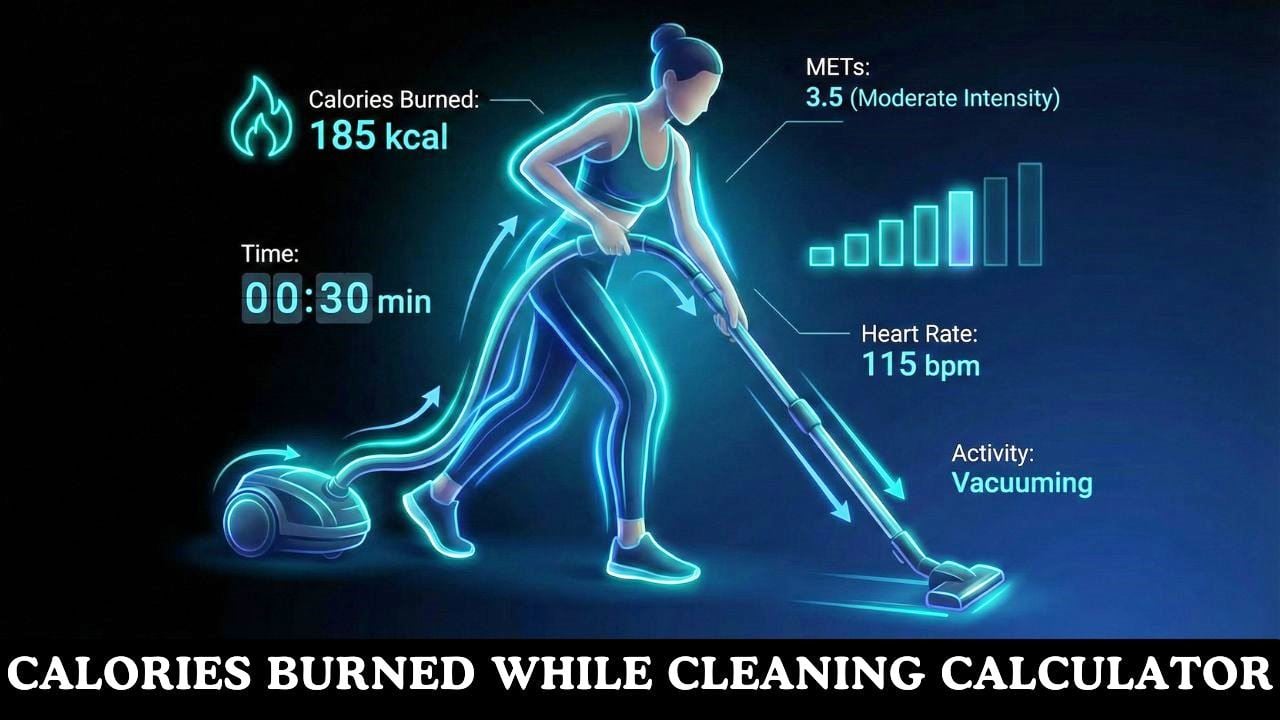
How Many Calories Does Cleaning Burn?
Cleaning burns between 100-300 calories per hour depending on the type of activity, your body weight, and how vigorously you work. General housework like vacuuming or mopping burns approximately 150-200 calories per hour for most adults, while more intense tasks like scrubbing floors or moving furniture can burn 250-350 calories per hour.
Household chores are an often-overlooked form of physical activity that contributes to your daily energy expenditure. While cleaning may not replace structured exercise, it adds to your overall activity level and can help you stay active throughout the day.
Key factors that affect cleaning calorie burn:
- Activity type: Heavy tasks like moving furniture burn 2-3x more than light dusting
- Body weight: Heavier individuals burn more calories at the same effort level
- Duration: Longer cleaning sessions naturally burn more total calories
- Intensity: Working faster or with more effort increases calorie burn
- Movement patterns: Tasks involving bending, reaching, and walking burn more
The Science Behind Cleaning Calorie Calculation
This calculator uses the MET (Metabolic Equivalent of Task) system, which measures energy expenditure relative to resting metabolism. MET values for cleaning activities come from the Compendium of Physical Activities, the gold standard for activity energy expenditure research.
Calories/min = 3.5 × 3.5 × 70 ÷ 200 = 4.3 calories/minute
Total = 4.3 × 30 = 129 calories
The calculator applies an effort level multiplier to account for variations in how vigorously you clean, providing more personalized estimates.
Calories Burned by Cleaning Activity
Different cleaning activities require varying levels of effort and burn different amounts of calories. Here’s a breakdown of common household chores and their approximate calorie burn for a 70kg (154 lb) person.
| Cleaning Activity | MET Value | Calories/Hour (70kg) | Intensity Level |
|---|---|---|---|
| Dusting furniture | 2.0 METs | ~147 cal | Light |
| Making bed | 2.5 METs | ~184 cal | Light |
| Washing dishes | 2.8 METs | ~206 cal | Light-Moderate |
| General cleaning | 3.3 METs | ~243 cal | Moderate |
| Vacuuming | 3.5 METs | ~257 cal | Moderate |
| Mopping floors | 3.8 METs | ~279 cal | Moderate-Active |
| Scrubbing floors | 4.0 METs | ~294 cal | Active |
| Bathroom cleaning | 4.5 METs | ~331 cal | Active |
| Moving furniture | 5.0 METs | ~368 cal | Vigorous |
| Deep cleaning | 5.5 METs | ~404 cal | Vigorous |
Note: These values assume continuous activity. Actual calorie burn may be lower if you take frequent breaks or work at a slower pace.
How Cleaning Compares to Traditional Exercise
While cleaning isn’t a substitute for dedicated exercise, it does contribute to your daily activity level. Here’s how common cleaning tasks compare to traditional exercises:
- Vacuuming (3.5 MET): Similar to slow walking at 3 mph
- Mopping floors (3.8 MET): Comparable to light cycling
- Scrubbing floors (4.0 MET): Similar to water aerobics
- Moving furniture (5.0 MET): Comparable to moderate weight training
- Deep cleaning (5.5 MET): Similar to brisk walking at 4 mph
An hour of active housework can burn as many calories as 30 minutes of moderate exercise, making regular cleaning a meaningful contributor to overall fitness.

Manish is a NASM-certified fitness and nutrition coach with over 10 years of experience in weight lifting and fat loss fitness coaching. He specializes in gym-based training and has a lot of knowledge about exercise, lifting technique, biomechanics, and more.
Through “Fit Life Regime,” he generously shares the insights he’s gained over a decade in the field. His goal is to equip others with the knowledge to start their own fitness journey.