
Hip Thrust Calories Burned Calculator
Calculate calories burned during hip thrusts with scientific precision based on resistance, sets, reps, and experience level
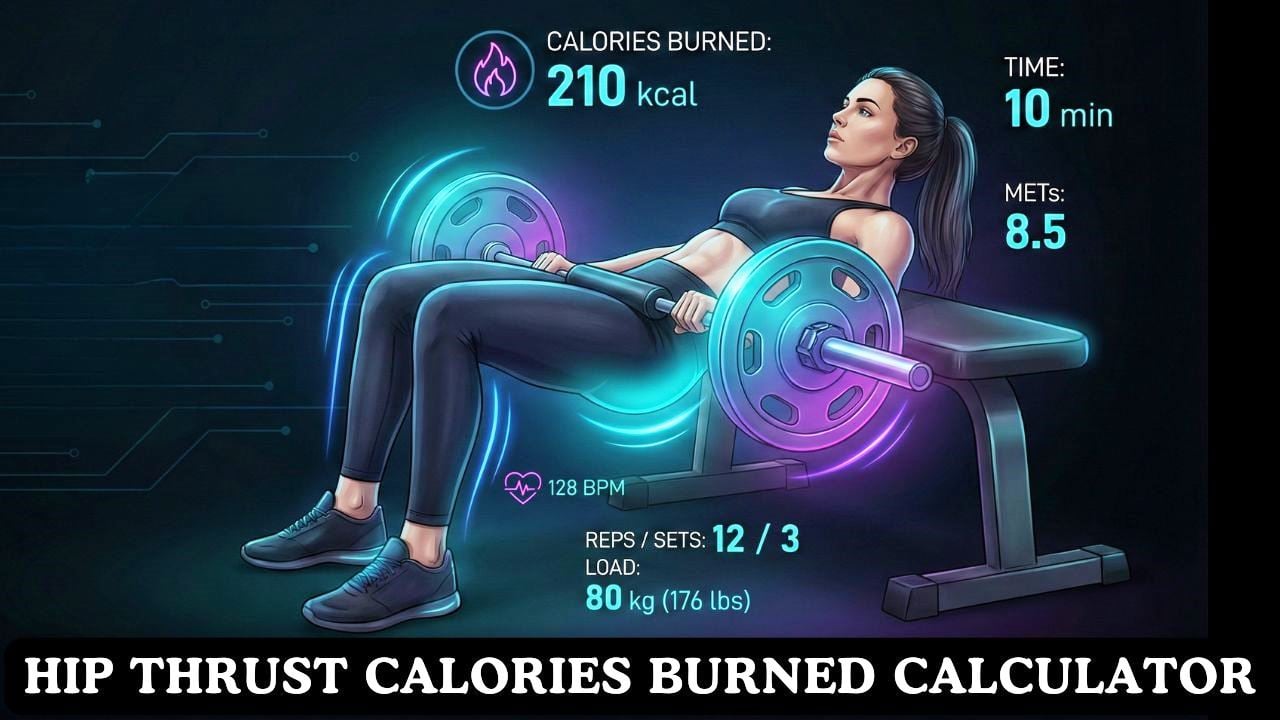
Hip Thrust Workout Analysis
Calories Burned
Form & Safety Tips
How Many Calories Do Hip Thrusts Burn? 🍑
Hip thrusts burn between 140-420 calories per hour, making them one of the most effective glute-focused exercises for building strength while providing significant metabolic benefits. According to the Compendium of Physical Activities, resistance training exercises like hip thrusts range from 4.0-7.0 METs depending on the load and intensity used.
For a 150-pound person, a 20-minute moderate hip thrust session with added resistance can burn approximately 110-140 calories while simultaneously building gluteus maximus strength, improving hip extension power, and enhancing posterior chain development. The hip thrust is unique because it isolates the glutes more effectively than squats or deadlifts, providing superior muscle activation with less joint stress.
Hip Thrust Intensity Levels & Energy Expenditure
Based on research from the Compendium of Physical Activities and strength training studies, here are the different hip thrust intensity levels:
- Bodyweight Hip Thrusts (4.0 METs): Ideal for beginners learning proper form, focusing on glute activation without added resistance
- Light Resistance Hip Thrusts (5.0 METs): Using light dumbbells or resistance bands to introduce progressive overload
- Moderate Resistance Hip Thrusts (6.0 METs): Barbell loading that challenges strength while maintaining proper form and full range of motion
- Heavy Resistance Hip Thrusts (7.0 METs): High-load training for maximum strength gains and power development
According to research in the Journal of Orthopaedic & Sports Physical Therapy, hip thrusts produce significantly greater gluteus maximus activation compared to squats and deadlifts, making them the gold standard for glute development and hip extension strength!
Hip Thrust Calorie Burn by Duration & Intensity
Here’s how many calories a 150-pound (68 kg) person burns during hip thrust workouts at different intensities:
| Intensity Level | MET Value | 10 Minutes | 20 Minutes | 30 Minutes |
|---|---|---|---|---|
| Bodyweight | 4.0 | 48 cal | 95 cal | 143 cal |
| Light Resistance | 5.0 | 60 cal | 119 cal | 179 cal |
| Moderate Resistance | 6.0 | 71 cal | 143 cal | 214 cal |
| Heavy Resistance | 7.0 | 83 cal | 167 cal | 250 cal |
Calorie Burn Formula for Hip Thrusts
Our calculator uses the scientifically validated MET formula with resistance-specific adjustments:
Where:
• MET Value: 4.0-7.0 (based on intensity and load)
• Body Weight: Your weight in kilograms
• Duration: Active thrusting time in minutes
• Resistance Factor: 1.0 + (Added Weight ÷ Body Weight) × 0.3
• Adjustments: Experience (0.9-1.1) × Rest Period (0.8-0.9)
150 lb (68 kg) person | Moderate intensity (6.0 MET) | 20 minutes | 60 kg added weight | Intermediate experience
Resistance Factor = 1.0 + (60 ÷ 68) × 0.3 = 1.26
Base Calories = (6.0 × 3.5 × 68) ÷ 200 × 20 = 143 cal
Adjusted Calories = 143 × 1.26 × 1.0 = 180 calories
Hip Thrust Health & Performance Benefits
Research from the Journal of Orthopaedic & Sports Physical Therapy shows hip thrusts provide multiple benefits:
- Maximum Glute Activation: Superior gluteus maximus engagement compared to squats and deadlifts for targeted muscle development
- Hip Extension Power: Builds explosive strength for sprinting, jumping, and athletic performance
- Posterior Chain Development: Strengthens hamstrings, glutes, and lower back muscles comprehensively
- Lower Joint Stress: Less knee and spinal loading compared to squats, making it safer for many lifters
- Functional Strength: Improves hip mobility, pelvic stability, and movement patterns for daily activities
- Injury Prevention: Strengthens supporting muscles and improves biomechanics to reduce injury risk
Learn more about building stronger glutes with gym machines or explore comprehensive leg exercises to complement your hip thrust training.
Frequently Asked Questions About Hip Thrust Calorie Burn
Q: How many calories does 100 hip thrusts burn?
For a 150-pound person performing bodyweight hip thrusts, 100 reps (approximately 8-10 minutes of work) burns roughly 40-50 calories. With moderate added resistance (6.0 METs), this increases to 60-75 calories. The actual burn depends on weight, resistance, tempo, and rest periods.
Q: Are hip thrusts better than squats for glute development?
Research shows hip thrusts produce superior gluteus maximus activation compared to squats. However, both exercises are valuable—squats provide more comprehensive leg development while hip thrusts offer isolated glute targeting with less knee stress. Combining both is optimal for complete lower body training.
Q: How often should I do hip thrusts for best results?
For strength and muscle growth, perform hip thrusts 2-3 times per week with 48-72 hours rest between sessions. This allows adequate recovery for muscle protein synthesis and adaptation. Advanced lifters may train up to 4 times weekly with varied intensities.
Q: Do heavy hip thrusts burn more calories than high-rep sets?
Heavy hip thrusts (7.0 METs) burn more calories per minute than bodyweight (4.0 METs), but the total burn depends on workout duration. Heavy sets require longer rest, potentially reducing total calorie expenditure. For maximum calorie burn, moderate weight with shorter rest periods is most effective.

Manish is a NASM-certified fitness and nutrition coach with over 10 years of experience in weight lifting and fat loss fitness coaching. He specializes in gym-based training and has a lot of knowledge about exercise, lifting technique, biomechanics, and more.
Through “Fit Life Regime,” he generously shares the insights he’s gained over a decade in the field. His goal is to equip others with the knowledge to start their own fitness journey.