
Hula Hooping Calories Burned Calculator
Estimate your energy expenditure from hula hooping using MET-based calculations
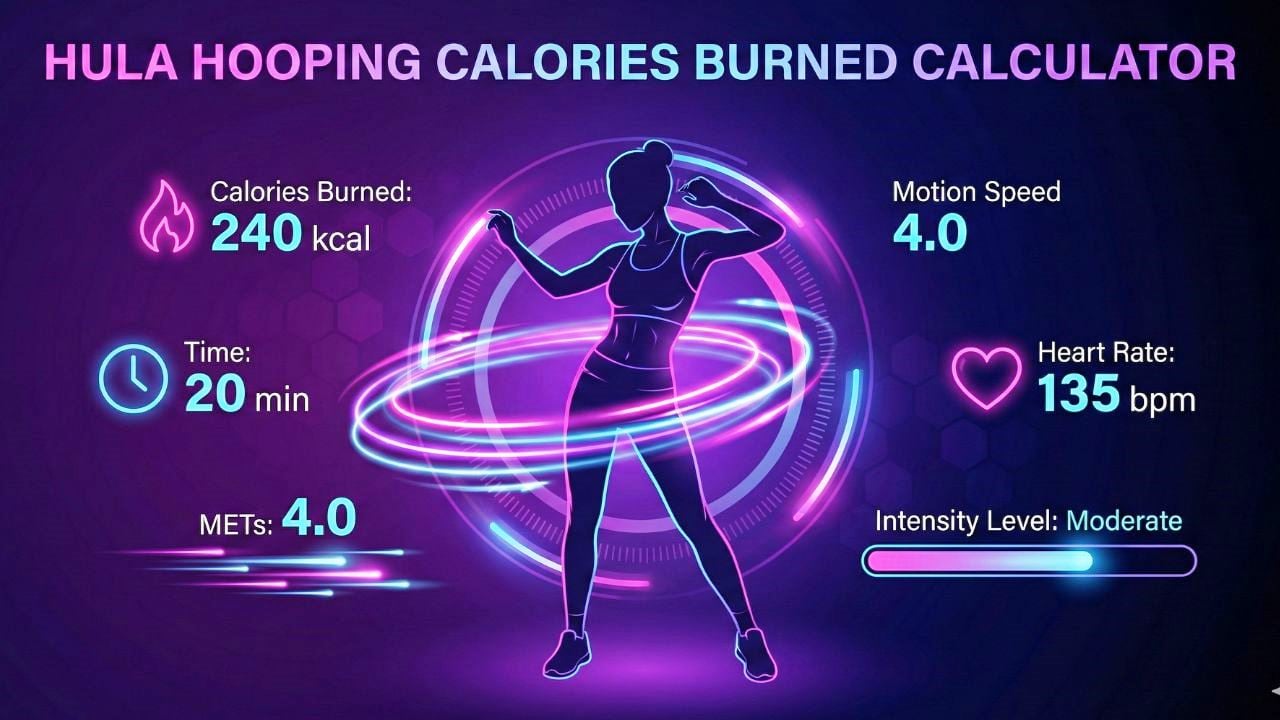
How Many Calories Does Hula Hooping Burn?
Hula hooping burns approximately 3 to 7 calories per minute depending on your body weight, workout intensity, and the type of hoop you use. For a typical 30-minute session, you can expect to burn between 150-210 calories. This makes hula hooping comparable to activities like kickboxing, step aerobics, and brisk jogging—while being more fun and engaging for many people.
According to a study by the American Council on Exercise (ACE), participants using weighted hula hoops burned an average of 210 calories in just 30 minutes, which is about 7 calories per minute. This calorie burn rate makes hula hooping one of the most efficient home workout options available.
Calories Burned by Duration (Based on Body Weight)
| Body Weight | 10 Minutes | 15 Minutes | 20 Minutes | 30 Minutes | 45 Minutes | 60 Minutes |
|---|---|---|---|---|---|---|
| 125 lbs (57 kg) | 58 cal | 87 cal | 116 cal | 173 cal | 260 cal | 347 cal |
| 140 lbs (64 kg) | 65 cal | 98 cal | 130 cal | 195 cal | 293 cal | 390 cal |
| 155 lbs (70 kg) | 71 cal | 107 cal | 143 cal | 214 cal | 321 cal | 428 cal |
| 170 lbs (77 kg) | 78 cal | 117 cal | 156 cal | 234 cal | 351 cal | 468 cal |
| 185 lbs (84 kg) | 85 cal | 128 cal | 170 cal | 255 cal | 383 cal | 510 cal |
| 200 lbs (91 kg) | 92 cal | 138 cal | 184 cal | 276 cal | 414 cal | 552 cal |
Note: These estimates are based on moderate-intensity hula hooping with a MET value of 5.8. Actual calories burned may vary based on intensity level, hoop weight, and individual fitness levels.
Key factors that influence calorie expenditure:
- Body weight: Heavier individuals expend more energy performing the same activity—a 200 lb person burns about 60% more calories than a 125 lb person
- Intensity level: Vigorous hooping (6.0+ METs) can burn 30-50% more calories than light hooping
- Hoop weight: Weighted hoops (1.5-3+ lbs) increase muscle engagement and calorie burn by 10-30%
- Movement complexity: Full body dance patterns and advanced tricks engage more muscle groups
- Session duration: Longer sessions build cardiovascular endurance and maximize calorie burn
Weighted vs Regular Hula Hoop: Calorie Burn Comparison
The type of hoop you use significantly impacts calorie expenditure. Weighted hula hoops (typically 1.5-3+ lbs) provide more resistance, requiring greater effort and burning more calories than standard plastic hoops (0.5-1 lb).
| Hoop Type | Weight Range | Calories/Minute | 30-Min Session | Best For |
|---|---|---|---|---|
| Light Plastic Hoop | 0.5-1 lbs | 4-5 cal | 120-150 cal | Advanced hoopers, tricks |
| Standard Hoop | 1-2 lbs | 5-6 cal | 150-180 cal | General fitness, cardio |
| Weighted Hoop | 1.5-3 lbs | 6-7 cal | 180-210 cal | Weight loss, core strength |
| Heavy Weighted Hoop | 3+ lbs | 7-8 cal | 210-240 cal | Maximum resistance training |
Research-backed: According to the American Council on Exercise study, weighted hula hooping burned an average of 7 calories per minute (210 calories in 30 minutes), making it comparable to cardio kickboxing and boot camp workouts.
A 2019 study published in Obesity Facts compared weighted hula hooping to walking in overweight individuals. The results were remarkable: participants who hula hooped for just 12.8 minutes per day experienced significant reductions in abdominal fat and waist circumference compared to those who walked nearly 10,000 steps daily. The hula hooping group also saw an increase in trunk muscle mass, demonstrating benefits beyond simple calorie burn.
The Calorie Calculation Formula Explained
This calculator uses the MET (Metabolic Equivalent of Task) formula, which is the gold standard method in exercise physiology for estimating energy expenditure during physical activities:
Calories = (5.8 × 3.5 × 70) ÷ 200 × 20
Calories = (1,421) ÷ 200 × 20
Calories = 7.1 × 20 = 142 calories
Understanding MET Values: One MET represents the energy expended at rest. Hula hooping has MET values ranging from 4.0 (light) to 6.0+ (vigorous). Our calculator applies adjustment factors for hoop weight (1.0-1.3×), hooping style (1.0-1.15×), and experience level (0.9-1.1×) to the base MET value for personalized accuracy.
Learn more about MET values from the Compendium of Physical Activities, which provides standardized MET values used by researchers and fitness professionals worldwide.
Hula Hooping Intensity Levels & MET Values
Exercise intensity is measured using MET values, where one MET equals the energy you expend at rest. Hula hooping offers different intensity levels, each with its own calorie burn rate and fitness benefits.
| Intensity Level | MET Value | Description | Heart Rate | Best For |
|---|---|---|---|---|
| Light | 4.0 | Slow, rhythmic movements; easy to maintain conversation | 50-60% max | Beginners, warm-up, recovery |
| Moderate | 5.0-5.8 | Steady pace; slightly breathless but can still talk | 60-75% max | Fat burning, endurance |
| Vigorous | 6.0-7.0 | Fast-paced; difficult to maintain conversation | 75-85% max | Cardio fitness, HIIT training |
Calorie Burn by Intensity: For a 155 lb (70 kg) person doing 30 minutes of hula hooping:
- Light intensity (4.0 METs): ~147 calories burned
- Moderate intensity (5.8 METs): ~214 calories burned (45% more than light)
- Vigorous intensity (6.5 METs): ~240 calories burned (63% more than light)
Choosing the Right Hula Hoop for Your Goals
Hula Hoop Size & Weight Selection Guide
Choosing the right hoop makes a significant difference in your workout effectiveness and enjoyment. Here’s how to select based on your fitness goals:
| User Profile | Recommended Weight | Recommended Size | Material | Why It Works |
|---|---|---|---|---|
| Complete Beginner | 1.5-2.5 lbs | 42-46 inches | Weighted, padded | Larger, heavier hoops spin slower and are easier to control |
| Weight Loss Focus | 2-3 lbs | 40-44 inches | Weighted, foam-covered | Maximum calorie burn with comfortable sustained use |
| Core Strengthening | 2.5-3.5 lbs | 38-42 inches | Weighted, textured | Provides resistance for muscle engagement |
| Intermediate Fitness | 1.5-2 lbs | 38-42 inches | Weighted or standard | Balance between speed and resistance |
| Advanced/Tricks | 0.5-1.5 lbs | 32-38 inches | Polypro, HDPE | Lighter weight allows faster spins and complex movements |
Pro Tip: When standing the hoop vertically next to you, the top should reach somewhere between your waist and chest. Beginners should choose hoops on the larger side, while experienced hoopers can work with smaller diameters.
Beginner’s Guide: Getting Started
Starting a hula hoop fitness routine is easier than you think. Follow this progression for best results:
| Week | Duration | Frequency | Focus | Expected Calories/Session |
|---|---|---|---|---|
| 1-2 | 10-15 min | 3-4 times/week | Learning basic technique, building rhythm | 60-100 |
| 3-4 | 15-20 min | 4-5 times/week | Increasing endurance, maintaining consistency | 100-140 |
| 5-6 | 20-30 min | 5-6 times/week | Building cardiovascular fitness | 140-210 |
| 7+ | 30-45 min | 5-6 times/week | Advanced patterns, maximum calorie burn | 210-315 |
Success Tip: Start slowly and focus on proper form. It’s better to do 10 minutes correctly than 30 minutes with poor technique. Listen to your body and take rest days as needed.
Related Fitness Calculators & Resources
Maximize your fitness journey with our comprehensive tools and resources:
- Body Fat Percentage Chart – Understand your body composition and track progress
- Visual Body Fat Guide – See what different body fat percentages look like
- Core Strengthening Exercises – Complement your hula hoop routine
- Benefits of Physical Fitness – Learn about comprehensive exercise benefits
For more workout ideas, nutrition guides, and fitness calculators, visit our fitness resource library.

Manish is a NASM-certified fitness and nutrition coach with over 10 years of experience in weight lifting and fat loss fitness coaching. He specializes in gym-based training and has a lot of knowledge about exercise, lifting technique, biomechanics, and more.
Through “Fit Life Regime,” he generously shares the insights he’s gained over a decade in the field. His goal is to equip others with the knowledge to start their own fitness journey.