You don’t need ten exercises to get started. Pick three to five from the list below, do them two or three days a week, and make them a little harder once they feel easy. That’s the whole plan.
Those numbers come from published guidance. Cleveland Clinic suggests working up to one or two sets of 10 to 15 reps, two or three times a week. The World Health Organization’s adult guidelines ask for muscle-strengthening on two or more days a week, covering all major muscle groups. Core work is only one piece of that, so it shouldn’t be the only strength training you do.
Short on time? The glute bridge, dead bug and plank (knees down if you need to) make a good starting trio.
Doing this for a flatter stomach? Core exercises build the muscle under the fat. They don’t burn belly fat by themselves (more on that below). If fat loss is the goal, our weight loss calorie calculator can give you a calorie target.

- 10 Beginner Core Exercises
- 1. Supine March with Pelvic Tilt
- 2. Glute Bridge
- 3. Dead Bug
- 4. Bird Dog
- 5. Plank
- 6. Side Plank
- 7. Reverse Crunch
- 8. Hollow Hold
- 9. Superman
- 10. Mountain Climber
- Watch: Core Strengthening Exercises for Beginners at Home
- FAQs
- Should beginners train their core?
- How long does it take to build core strength?
- How often should I do core exercises?
- How can I strengthen my core at home with no equipment?
- Do core exercises burn belly fat?
- Can core exercises help with back pain?
- Sources
10 Beginner Core Exercises
The list runs roughly from gentlest to toughest, so start near the top.
1. Supine March with Pelvic Tilt
A gentle starter: your lower back stays still while one leg lifts. Cleveland Clinic lists it among its beginner core exercises.
How to do the supine march
- Lie on your back with your knees bent, feet flat on the floor and arms at your sides.
- Tighten your stomach muscles and press your lower back gently towards the floor.
- Slowly lift one foot off the floor, keeping the knee bent and your back flat.
- Hold for a few seconds, lower the foot, then switch legs.
How much: 6 to 8 lifts per leg, holding each for about 5 seconds (Cleveland Clinic suggests 5 to 10). Easier: lift your foot only an inch or two. Harder: straighten the lifted leg a few inches off the floor.
2. Glute Bridge
The bridge works your buttocks and the back of your thighs along with your trunk muscles. It’s also on Cleveland Clinic’s beginner core list, and it needs no equipment.
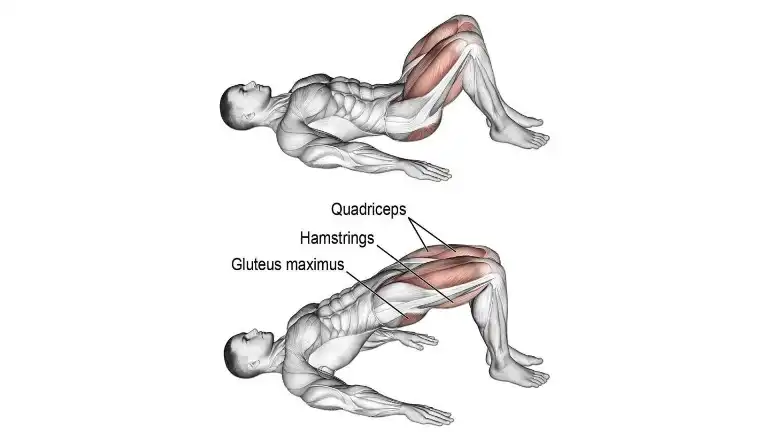
How to do the glute bridge
- Lie on your back with your knees bent, feet flat on the floor and arms at your sides, palms down.
- Tighten your stomach, squeeze your buttocks and push through your heels to lift your hips.
- Stop when your shoulders, hips and knees form a straight line. Don’t arch your lower back to go higher.
- Hold briefly while breathing normally, then lower your hips slowly.
How much: 6 to 8 reps, holding each for about 5 seconds. Easier: lift your hips a smaller distance. Harder: the marching bridge, which Cleveland Clinic lists as an intermediate move.
3. Dead Bug
The dead bug teaches you to keep your lower back steady while your arms and legs move.
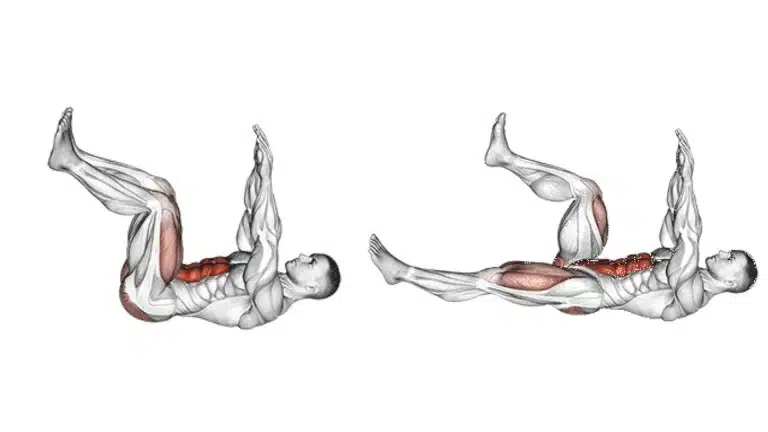
How to do the dead bug
- Lie on your back with your arms reaching towards the ceiling and your knees bent over your hips.
- Press your lower back gently towards the floor and tighten your stomach.
- Slowly lower one arm over your head and straighten the opposite leg, only as far as you can go without your lower back arching.
- Return to the start and repeat on the other side.
How much: 6 to 8 reps per side. Easier: keep both feet on the floor and slide one heel away. Harder: slow down both the lowering and the return.
4. Bird Dog
A balance challenge: you lift the opposite arm and leg while your trunk stays still. Cleveland Clinic includes it in its list of exercises for a strong core and back.
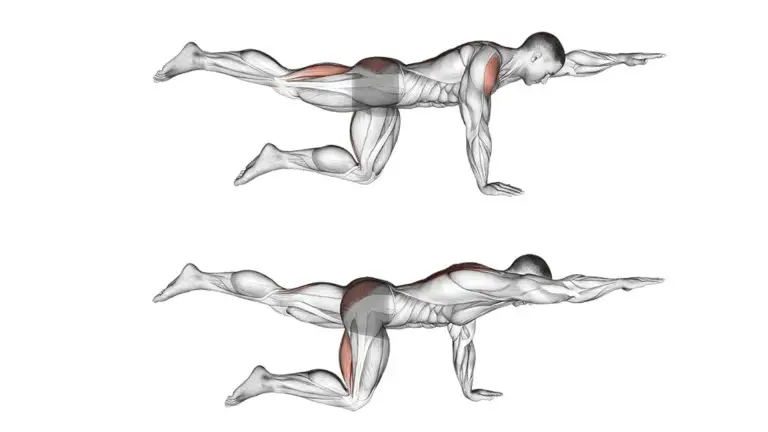
How to do the bird dog
- Start on all fours with your hands under your shoulders and your knees under your hips.
- Draw your stomach in and keep your back flat.
- Reach one arm forward and the opposite leg back, keeping your hips and shoulders level.
- Bring them back slowly and switch sides.
How much: 6 to 8 reps per side. Easier: lift only an arm or only a leg. Harder: pause for two to three seconds with your arm and leg extended.
5. Plank
The plank is a simple hold that asks your abdominal muscles to keep your body in a straight line. A 2017 study had 20 university students do eight plank variations while their muscle activity was measured.
The researchers found that the demand on the muscles could be raised by changing the variation, which is why there’s an easier and a harder version below.
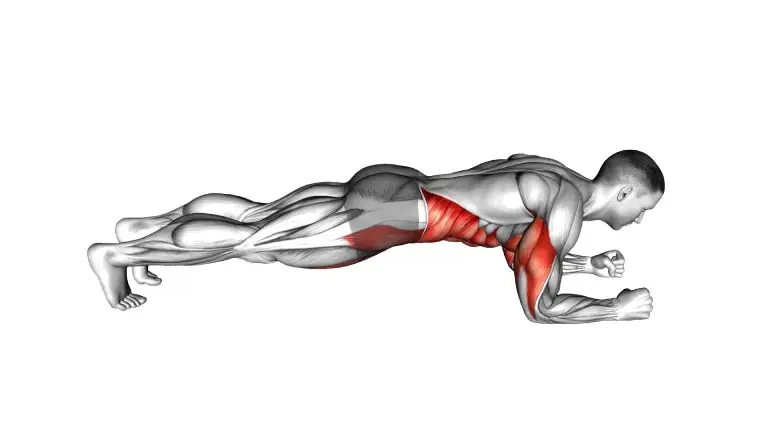
How to do the plank
- Lie face down, then prop yourself on your forearms with your elbows directly under your shoulders.
- Lift your hips and rest on your toes, with your legs straight.
- Keep one straight line from your shoulders to your ankles. Tighten your stomach and breathe normally.
- End the hold when your hips sag or your lower back arches.
How much: hold for 15 to 30 seconds. Easier: keep your knees on the floor, as Cleveland Clinic suggests. Harder: add 5 to 10 seconds at a time, then move to a harder variation once you can hold for more than a minute.
6. Side Plank
The side plank works the sides of your trunk. In that same 2017 study, the side planks produced the highest activity in the lumbar erector spinae (the muscles along your lower back) of all the plank variations tested.
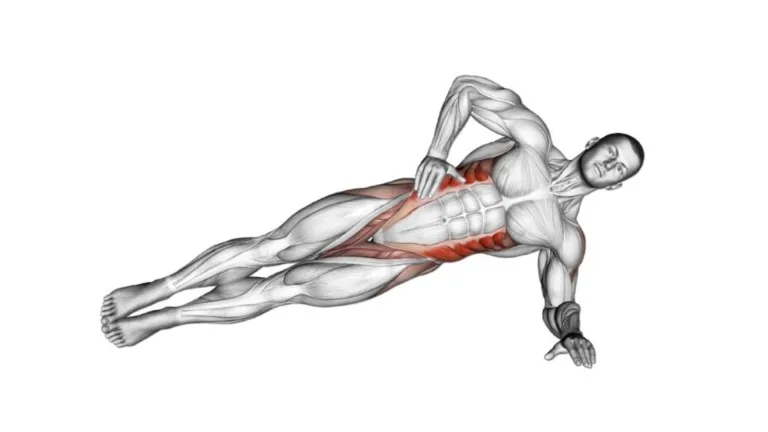
How to do the side plank
- Lie on your side and prop yourself up on one forearm, with your elbow directly under your shoulder.
- Stack your feet, press into the floor and lift your hips so your body forms a straight line.
- Rest your free hand on your hip or in front of you. Don’t let your hips drop or roll.
- Hold, lower with control, then repeat on the other side.
How much: hold for 15 to 30 seconds on each side. Easier: drop your bottom knee to the floor, as Cleveland Clinic suggests. Harder: add 5 to 10 seconds at a time.
7. Reverse Crunch
Your upper back stays on the mat while your knees come towards your chest. In a study of 21 healthy adults, a reverse crunch on a 30-degree incline was among the exercises with the highest activity in both the upper and lower rectus abdominis (the muscle at the front of your stomach).
That study used an inclined version, so a flat-floor version may feel different. If you have osteoporosis, see the note above before trying this one.
You’ll often see this move sold as a “lower abs” exercise. The studies here do measure the upper and lower parts of that muscle separately, but none of them show that an exercise works only the lower part.
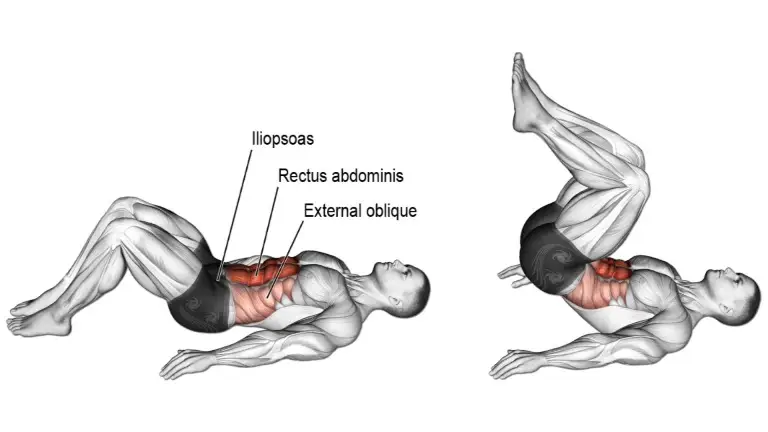
How to do the reverse crunch
- Lie on your back with your arms at your sides and your hips and knees bent to about 90 degrees.
- Tighten your stomach and slowly bring your knees towards your chest, lifting your hips a small amount off the floor.
- Lower your legs back to the start with control. Don’t swing them.
How much: 6 to 8 reps. Easier: keep the movement small. Harder: take three seconds to lower your legs.
8. Hollow Hold
The hollow hold is an isometric exercise, which means you hold one position instead of moving. It’s harder than it looks, so begin with the easier version.

How to do the hollow hold
- Lie on your back with your arms stretched overhead, next to your ears.
- Press your lower back into the floor.
- Lift your shoulders, arms and legs a short distance off the floor while keeping your lower back pressed down.
- If your lower back lifts off the floor, bend your knees or lower your legs and end the hold.
How much: start with a hold of about 10 seconds and build in 5-second steps. Easier: bend your knees and keep your arms by your sides. Harder: a longer hold with straight legs and arms overhead.
9. Superman
The superman works the muscles along your back and your buttocks rather than your stomach. A balanced core includes the back as well as the front, so it pairs well with the moves above. For more back-focused options, see our lower back strengthening exercises.
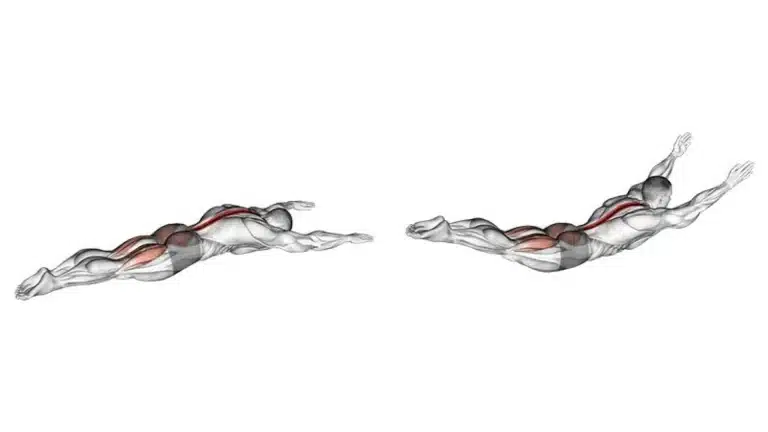
How to do the superman
- Lie face down with your legs straight and your arms stretched overhead.
- Look at the floor to keep your neck in line with your spine.
- Lift your chest, arms and legs a short distance off the floor and hold for about two seconds.
- Lower slowly. If it bothers your lower back, skip it.
How much: 6 to 8 reps, holding each for about two seconds. Easier: lift only your arms or only your legs. Harder: hold each rep for three to five seconds.
10. Mountain Climber
A moving plank. Your arms and shoulders hold your upper body in place while your legs move, so it’s harder than the first nine. Slow it down until it feels controlled.

How to do the mountain climber
- Start in a high plank with your hands under your shoulders and your body in a straight line.
- Bring one knee towards your chest, then return it to the start.
- Switch legs at a steady pace. Keep your hips level and don’t bounce.
How much: 6 to 8 reps per leg at a slow pace. Easier: put your hands on a sturdy raised surface. Harder: speed up once your form stays steady.
Watch: Core Strengthening Exercises for Beginners at Home
Here’s our video on the same topic. If anything in it differs from the written steps above, go with the written steps.

FAQs
Should beginners train their core?
Yes, as part of a balanced routine. The WHO recommends muscle-strengthening activity on two or more days a week for adults, and core exercises cover part of that. Start with the easier versions and build up slowly.
How long does it take to build core strength?
Cleveland Clinic says it often takes four to six weeks of consistent exercise to notice an actual change. How fast you progress depends on how often you train and how challenging the exercises are for you.
How often should I do core exercises?
Two or three days a week is a good place to start, which matches Cleveland Clinic’s beginner advice. Count sets, reps and hold times rather than minutes. There’s no set number of minutes that works for everyone.
How can I strengthen my core at home with no equipment?
Every exercise in this guide needs only floor space, and a mat is optional. The glute bridge, dead bug and plank are an easy place to start.
Do core exercises burn belly fat?
Not on their own. In a six-week trial, abdominal exercise didn’t significantly change abdominal fat or waist circumference. See the research section above for details.
Can core exercises help with back pain?
Exercise in general lowers your risk of back pain (see the research section above). If you already have back pain, check with a doctor or physical therapist first. This guide doesn’t cover treatment.
Sources
- Bull FC, Al-Ansari SS, Biddle S, et al. World Health Organization 2020 guidelines on physical activity and sedentary behaviour. Br J Sports Med. 2020;54:1451-1462. Used for the muscle-strengthening recommendation.
- Calatayud J, Casaña J, Martín F, et al. Progression of core stability exercises based on the extent of muscle activity. Am J Phys Med Rehabil. 2017;96:694-699. A 20-person study of plank variations.
- Escamilla RF, Babb E, DeWitt R, et al. Electromyographic analysis of traditional and nontraditional abdominal exercises. Phys Ther. 2006;86:656-671. A 21-person study that included the reverse crunch.
- Vispute SS, Smith JD, LeCheminant JD, Hurley KS. The effect of abdominal exercise on abdominal fat. J Strength Cond Res. 2011;25:2559-2564. A 24-person randomised trial.
- Shiri R, Coggon D, et al. Exercise for the prevention of low back pain: systematic review and meta-analysis of controlled trials. Am J Epidemiol. 2018;187:1093-1101.
- Steffens D, Maher CG, Pereira LS, et al. Prevention of low back pain: a systematic review and meta-analysis. JAMA Intern Med. 2016;176:199-208.
- Cleveland Clinic. 15 Best Core Exercises for All Levels. Used for beginner sets, reps, frequency and the supine march and bridge.
- Cleveland Clinic. Plank Exercises: What They Do For Your Body. Used for plank frequency and progression.
- Cleveland Clinic. Why a Strong Core Can Help Reduce Low Back Pain. Lists the bird dog, plank and side plank among its recommended exercises.
- Cleveland Clinic. Will Sit-ups Burn Off Your Belly Fat?
- Bone Health & Osteoporosis Foundation. Proper Body Alignment. Used for the advice to avoid sit-ups and abdominal crunches with osteoporosis.
- American College of Obstetricians and Gynecologists. Exercise During Pregnancy. Used for the advice to avoid lying flat on your back as much as possible.

Manish is a NASM-certified fitness and nutrition coach with over 10 years of experience in weight lifting and fat loss fitness coaching. He specializes in gym-based training and has a lot of knowledge about exercise, lifting technique, biomechanics, and more.
Through “Fit Life Regime,” he generously shares the insights he’s gained over a decade in the field. His goal is to equip others with the knowledge to start their own fitness journey.
I really like the article because of your illustrative image. It helps a reader to under the matter very well. Also, the author provides a range of practical exercises that are suitable for beginners and can be done without any equipment.
Overall, this article is a great resource for beginners looking to improve their core strength and fitness. The author’s expertise in fitness and wellness is evident throughout, making this an informative and engaging read. I highly recommend this article to anyone seeking to improve their physical well-being and fitness.