
Muscle Mass Calculator
Calculate your skeletal muscle mass using scientifically validated formulas for accurate body composition insights
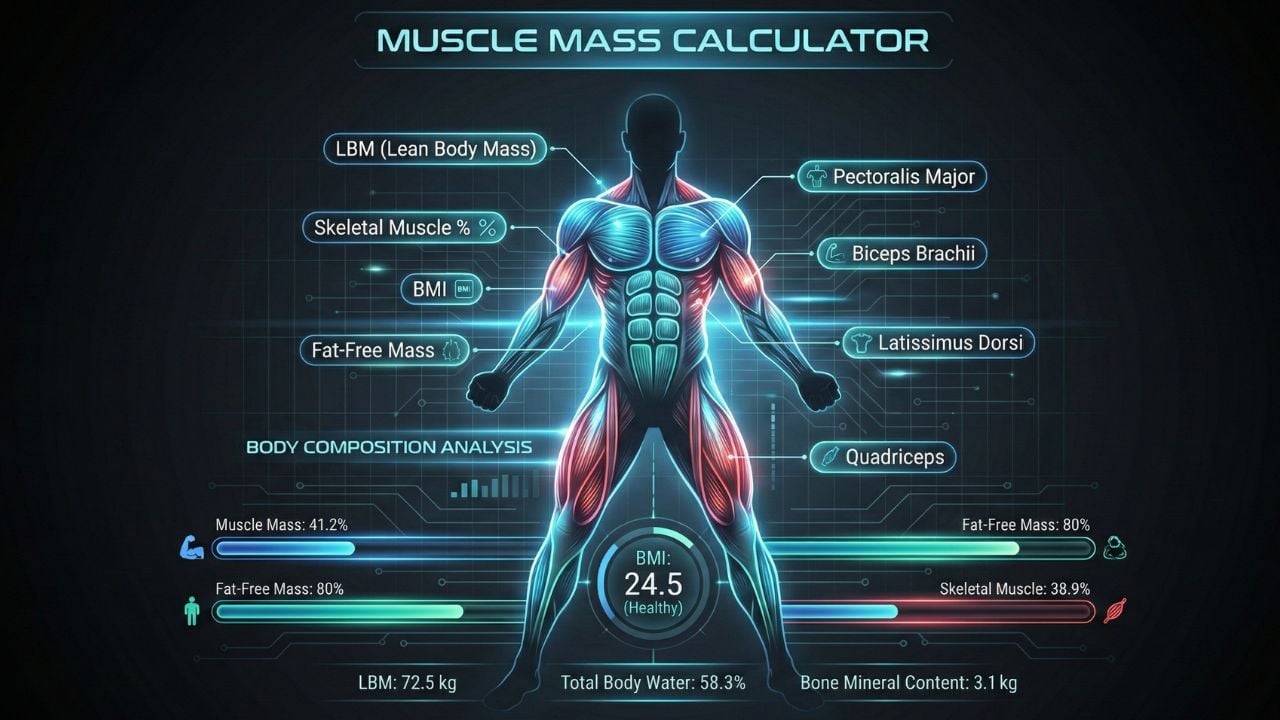
What is Skeletal Muscle Mass?
Skeletal muscle mass refers to the total weight of muscle tissue attached to your bones that you can voluntarily control. It typically accounts for 35-45% of body weight in healthy adult men and 30-40% in healthy adult women. This is distinct from smooth muscle (in organs) and cardiac muscle (heart).
Higher skeletal muscle mass is associated with better metabolic health, stronger bones, improved mobility, and enhanced overall function. Adequate muscle mass helps maintain independence as you age and supports better recovery from illness or injury.
Why Muscle Mass Matters
Muscle mass is a key indicator of metabolic health and physical fitness. Higher muscle mass correlates with better blood sugar control, stronger bones, improved balance, and enhanced metabolism. Age-related muscle loss (known as sarcopenia) can lead to reduced quality of life and increased disease risk.
Maintaining muscle through regular resistance training and proper nutrition is crucial for long-term health and independence.
Muscle Mass Calculation Methods
Step 1 – Calculate LBM: (0.407 × 80) + (0.267 × 180) – 19.2
LBM Result: 32.56 + 48.06 – 19.2 = 61.42 kg lean body mass
Step 2 – Convert to SMM: 61.42 × 0.50 = 30.71 kg skeletal muscle
As % of Body Weight: 30.71 / 80 = 38.4% (Below Average for males)
Important: The Boer formula calculates Lean Body Mass (LBM), which includes muscle, bone, organs, and water. We convert it to Skeletal Muscle Mass (SMM) by multiplying by 0.50, as skeletal muscle comprises approximately 50% of lean mass. Validated with ±8-10% accuracy.
Step 1 – Calculate LBM: (0.330 × 60) – (0.008 × 30) + (0.054 × 165) – 3.580
LBM Result: 19.8 – 0.24 + 8.91 – 3.58 = 24.89 kg lean body mass
Step 2 – Convert to SMM: 24.89 × 0.50 = 12.45 kg skeletal muscle
As % of Body Weight: 12.45 / 60 = 20.7% (Low for females – target is 30-40%)
Includes age adjustment for better accuracy across different age groups. Converted from LBM to SMM using 0.50 multiplier. Validated with ±6-8% accuracy.
Fat-Free Mass: 75 × (1 – 0.15) = 63.75 kg
Skeletal Muscle Mass: 63.75 × 0.50 = 31.88 kg muscle mass
As % of Body Weight: 31.88 / 75 = 42.5% (Good range for males)
Most accurate when body composition is known. Skeletal muscle comprises approximately 50% of fat-free mass (scientifically validated coefficient). The remaining 50% includes bones, organs, skin, and connective tissue.
Muscle Mass Standards by Age & Gender
| Age Group | Male (% of body weight) | Female (% of body weight) | Classification |
|---|---|---|---|
| 18-30 years | 40-50% | 35-45% | Excellent/Athletic |
| 30-40 years | 39-48% | 34-43% | Good/Above Average |
| 40-50 years | 38-45% | 33-40% | Average |
| 50-60 years | 36-42% | 31-37% | Below Average |
| 60+ years | 33-39% | 28-34% | Risk of Sarcopenia |
Note: Individual variations of ±5-8% are normal due to genetics, training status, and body composition. These ranges represent healthy muscle mass percentages for each age group.
Building and Maintaining Muscle Mass
Effective Training Strategies
Progressive resistance training is the most effective way to build muscle mass. Focus on compound exercises like barbell movements that work multiple muscle groups simultaneously. Train each major muscle group 2-3 times per week with adequate recovery between sessions.
Include exercises for all major muscle groups: chest, back, shoulders, arms, and legs. Progressively increase weight or repetitions to continue challenging your muscles.
Nutrition for Muscle Growth
Adequate protein intake is crucial for building and maintaining muscle mass. Aim for 1.6-2.2 grams of protein per kilogram of body weight daily, distributed across 3-4 meals. Quality protein sources include lean meats, fish, eggs, dairy, legumes, and protein supplements if needed.
Combine protein with sufficient calories (slight surplus for muscle gain, maintenance for recomposition) and carbohydrates to fuel your training. Stay hydrated and ensure adequate micronutrient intake through varied whole foods.
Preventing Age-Related Muscle Loss
Starting around age 30, adults lose 3-8% of muscle mass per decade without intervention. This accelerates after age 60. Combat this through consistent resistance training using gym equipment or bodyweight exercises.
Prioritize protein intake (higher end of recommendations for older adults), maintain physical activity, get adequate sleep (7-9 hours), and manage stress. Regular assessment helps track progress and adjust your approach as needed.
Common Questions About Muscle Mass
How accurate are muscle mass calculators?
Muscle mass calculators using formulas like Boer, Lee, or Hume provide estimates with ±6-10% accuracy for most people. They’re useful for tracking trends over time but cannot match the precision of lab-based methods like DEXA scans, MRI, or bioelectrical impedance analysis.
Use calculated values as a starting point and focus on tracking changes over time rather than absolute numbers. Consistent measurement conditions improve reliability.
How much muscle can I gain naturally?
Natural muscle gain rates vary by training experience. Beginners may gain 1-2 pounds of muscle per month in the first year with proper training and nutrition. Intermediate lifters (1-2 years training) typically gain 0.5-1 pound monthly. Advanced lifters gain even more slowly.
Total potential depends on genetics, gender (men typically build more due to higher testosterone), and training consistency. Most men can naturally build 40-50 pounds of muscle over their training lifetime; women typically 20-25 pounds.
Can you build muscle and lose fat simultaneously?
Yes, body recomposition (building muscle while losing fat) is possible, especially for beginners, those returning to training after a break, or individuals with higher body fat. It requires resistance training, adequate protein intake, and a slight calorie deficit or maintenance calories.
Progress is slower than focusing on one goal at a time, but it’s an effective approach for those prioritizing body composition over rapid scale weight changes. Track with body composition measurements rather than just weight.
Related Fitness Tools
Complete Your Fitness Assessment
Optimize your training with related tools. Check your body fat percentage to understand your body composition better. Explore comprehensive workout guides for arms and triceps to build balanced muscle mass.
⚕️ Medical Disclaimer
This Muscle Mass Calculator provides estimates based on scientifically validated equations for educational purposes only. Results do not constitute medical advice. Individual muscle mass varies significantly due to genetics, medical conditions, medications, hormones, training history, and body composition. The calculated values represent population averages and may not accurately reflect your individual muscle mass. For precise measurements, consider DEXA scans, MRI, or professional body composition analysis. Consult healthcare professionals, registered dietitians, or certified trainers before starting new exercise or nutrition programs, especially if you have pre-existing health conditions, injuries, or metabolic disorders. Rapid muscle gain attempts without proper guidance can lead to injury. Prioritize safe, sustainable approaches to building muscle mass.

Manish is a NASM-certified fitness and nutrition coach with over 10 years of experience in weight lifting and fat loss fitness coaching. He specializes in gym-based training and has a lot of knowledge about exercise, lifting technique, biomechanics, and more.
Through “Fit Life Regime,” he generously shares the insights he’s gained over a decade in the field. His goal is to equip others with the knowledge to start their own fitness journey.