
Serving Size Calculator
Calculate optimal serving sizes and personalized portions based on your dietary goals, nutritional needs, and lifestyle for effective portion control
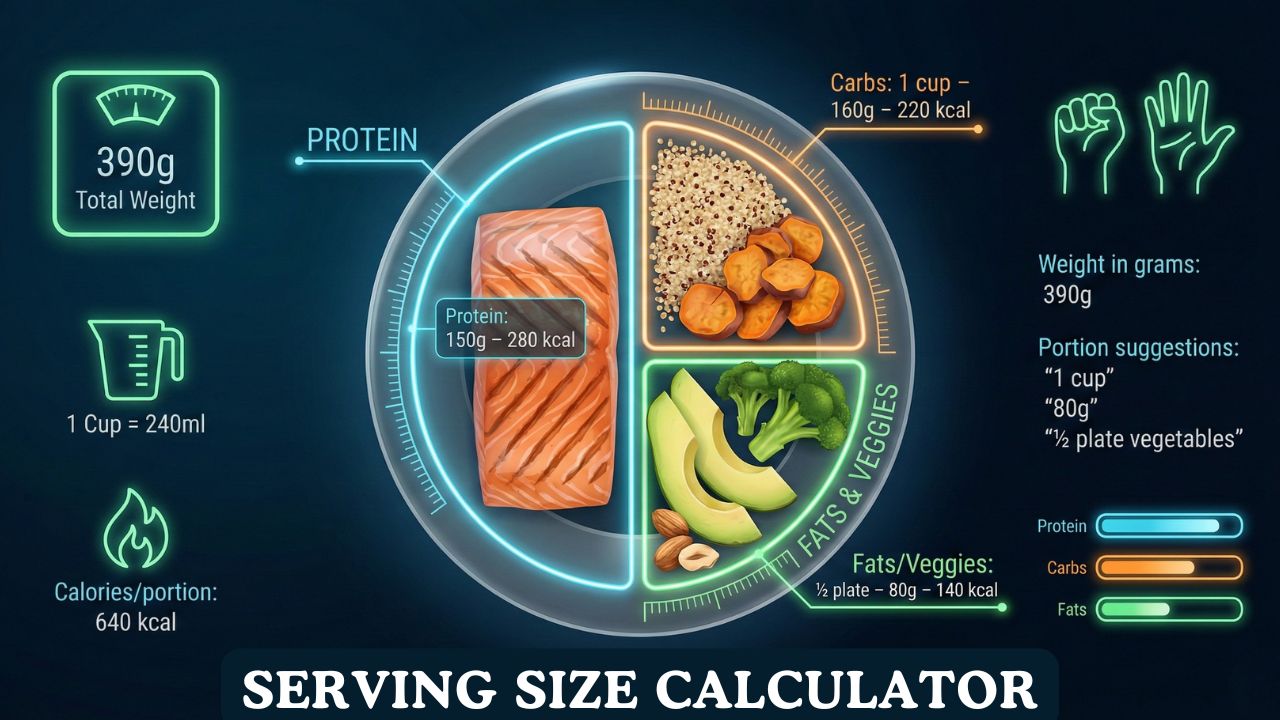
What Are Serving Sizes and Portion Control
Serving sizes represent standardized amounts of food used for nutritional labeling and dietary guidance. They help you understand how much to eat for balanced nutrition and effective weight management.
A serving size differs from a portion. Servings are fixed reference amounts (like 100g), while portions are the actual amounts you choose to eat. Understanding this distinction helps you control calorie intake and maintain healthy eating habits.
Basic Serving Size Calculations
Our basic calculator uses simple division to help you divide food into equal servings. This is essential for meal prep, recipe scaling, and accurate nutrition tracking.
Calculation: 1000 ÷ 4 = 250g per serving
Alternatively: 1000g chicken, 200g per serving
Calculation: 1000 ÷ 200 = 5 servings
Personalized Portion Recommendations
How Personalized Portions Work
Our personalized calculator uses the Mifflin-St Jeor equation to calculate your Basal Metabolic Rate (BMR), then multiplies by your activity level to determine Total Daily Energy Expenditure (TDEE). This provides accurate calorie needs based on your unique characteristics.
TDEE is then adjusted based on your dietary goal. Weight loss requires a caloric deficit (typically 500 calories below TDEE), while muscle gain needs a surplus (250-500 calories above TDEE). Maintenance keeps you at your current weight.
BMR: (10 × 80) + (6.25 × 180) – (5 × 30) + 5
BMR Result: 800 + 1125 – 150 + 5 = 1780 calories/day
TDEE: 1780 × 1.55 (moderate activity) = 2759 calories/day
For Weight Loss: 2759 – 500 = 2259 calories/day
Macronutrient Distribution Per Meal
Once total daily calories are determined, they’re distributed across your meals. Macronutrient ratios vary by goal: weight loss emphasizes protein (30-35% calories) to preserve muscle, while muscle gain increases both protein and carbohydrates for energy and recovery.
For a 2500-calorie diet split into 4 meals, each meal contains approximately 625 calories. With a 30% protein ratio, that’s 188 calories from protein, equal to 47g of protein per meal (since protein provides 4 calories per gram). Learn more about muscle recovery nutrition.
Practical Portion Control Strategies
Visual Portion Guides
Use your hand as a portable measuring tool. A palm-sized portion equals about 85-115g of protein (chicken, fish, meat). A fist represents approximately one cup of vegetables or grains. Your thumb is roughly one tablespoon of fats like oil or nut butter.
These visual cues work well when scales aren’t available. For greater accuracy during strength training phases, weigh foods and track macronutrients to ensure you’re meeting your nutritional targets.
Restaurant Portion Control
Dining out presents unique portion challenges as restaurant servings often exceed recommended amounts by 2-3 times. When eating at restaurants, request half portions, share meals, or immediately box half your entrée before eating to maintain portion control.
Use tools like Restaurant Calories to check exact calorie counts and nutrition facts for menu items at your favorite restaurants before ordering. This helps you make informed decisions and adjust your other daily portions accordingly to stay on track with your dietary goals.
Meal Prep and Pre-Portioning
Preparing meals in advance with pre-measured portions removes guesswork and prevents overeating. Cook large batches, divide into containers with calculated serving sizes, and refrigerate or freeze for the week ahead.
This strategy saves time, reduces food waste, and ensures consistent nutrition. Athletes and fitness enthusiasts use this method to maintain precise calorie and protein intake for muscle building or fat loss goals.
Common Serving Size Questions
How do I measure serving sizes accurately?
Digital kitchen scales provide the most accurate measurements for serving sizes. Weigh foods in grams or ounces before cooking for consistency. Measuring cups and spoons work for liquids and some dry ingredients but are less precise than scales.
Many nutrition labels list serving sizes in both weight (grams) and volume (cups). Always use the weight measurement when possible, as volume can vary significantly depending on how food is packed or prepared. Invest in an inexpensive digital scale for best results.
Should serving sizes change based on activity level?
Yes, serving sizes should increase with higher activity levels to match elevated energy expenditure. Someone exercising intensely 6 days per week requires 30-50% more calories (and therefore larger portions) than a sedentary individual of the same size.
Athletes performing compound exercises or endurance training need additional carbohydrates to fuel performance and replenish glycogen stores. Adjust your portions based on training intensity and recovery needs.
What’s the difference between serving size and recommended portion?
A serving size is a standardized reference amount used on nutrition labels (e.g., 100g, 1 cup), while a recommended portion is the amount suggested for your individual needs based on age, gender, activity level, and goals.
Two people might eat the same food, but their recommended portions differ. A 90kg bodybuilder needs larger protein portions than a 60kg sedentary individual. Use personalized calculators to determine your specific portion needs rather than relying solely on generic serving sizes. When eating out, check restaurant nutrition information to understand how menu items fit into your daily portions.
Related Fitness Tools
Complete Your Nutrition Plan
Optimize your diet with complementary tools. Calculate your body fat percentage to better understand your body composition and adjust portions accordingly. Explore back training and leg workouts to maximize your fitness results with proper nutrition timing and portions.
This serving size calculator provides estimates based on scientific formulas and general nutritional guidelines. Results are for informational and educational purposes only and should not replace professional medical or nutritional advice.
Individual nutritional needs vary based on medical conditions, medications, metabolic health, and other factors not captured by calculators. Consult a registered dietitian, nutritionist, or healthcare provider before making significant dietary changes, especially if you have diabetes, eating disorders, kidney disease, or other health conditions.
Portion recommendations assume healthy individuals without metabolic disorders. Pregnant or nursing women, children, elderly individuals, and those with medical conditions require specialized nutritional guidance. Always seek professional advice for personalized nutrition planning.

Manish is a NASM-certified fitness and nutrition coach with over 10 years of experience in weight lifting and fat loss fitness coaching. He specializes in gym-based training and has a lot of knowledge about exercise, lifting technique, biomechanics, and more.
Through “Fit Life Regime,” he generously shares the insights he’s gained over a decade in the field. His goal is to equip others with the knowledge to start their own fitness journey.