
Do your knees wobble when you squat? Do your hips feel stiff after a long day in the office chair? Or maybe you just want to fill out the sides of your glutes?
If yes, it’s time to train your hip abductors (the muscles responsible for side-to-side stability, better posture, and stronger athletic movement.
Enter the cable hip abduction – a targeted exercise that’s about to become your secret weapon for building stronger, more resilient hips.

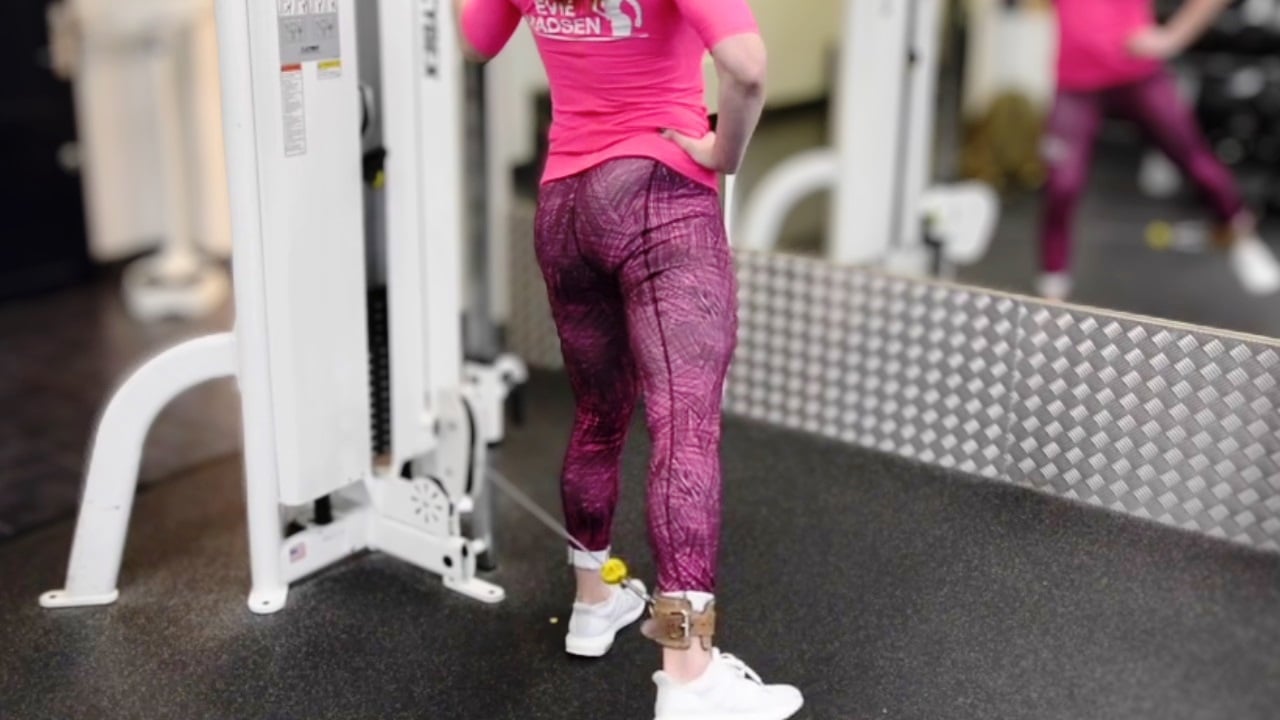
What is Cable Hip Abduction
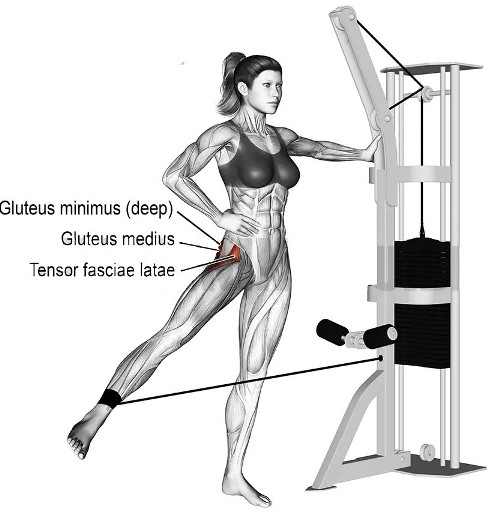
The cable hip abduction is an isolation exercise that targets the hip abductor muscles, including the gluteus medius, gluteus minimus, and tensor fasciae latae. Think of it as giving your side glutes a dedicated workout they rarely get from squats or lunges alone.
The setup is straightforward: you stand sideways next to a cable machine, with an ankle cuff attached to the low pulley. The cuff goes around your outer ankle, and you lift your leg out to the side against the cable’s resistance.
Using a cable machine instead of bands or bodyweight allows for constant tension.
It provides stability to improve form and works the hip abductors through a larger range of motion than some free-weight alternatives.
Know More: 100+ Leg Workout To Build Mass and Strength
Cable Hip Abduction Muscles Worked
- The primary Muscles worked during cable hip abductions are Gluteus Medius, Gluteus Minimus and Tensor Fasciae Latae (TFL)
- The exercise also engages the piriformis, obliques, and stabilizing leg muscles (quads, hamstrings).
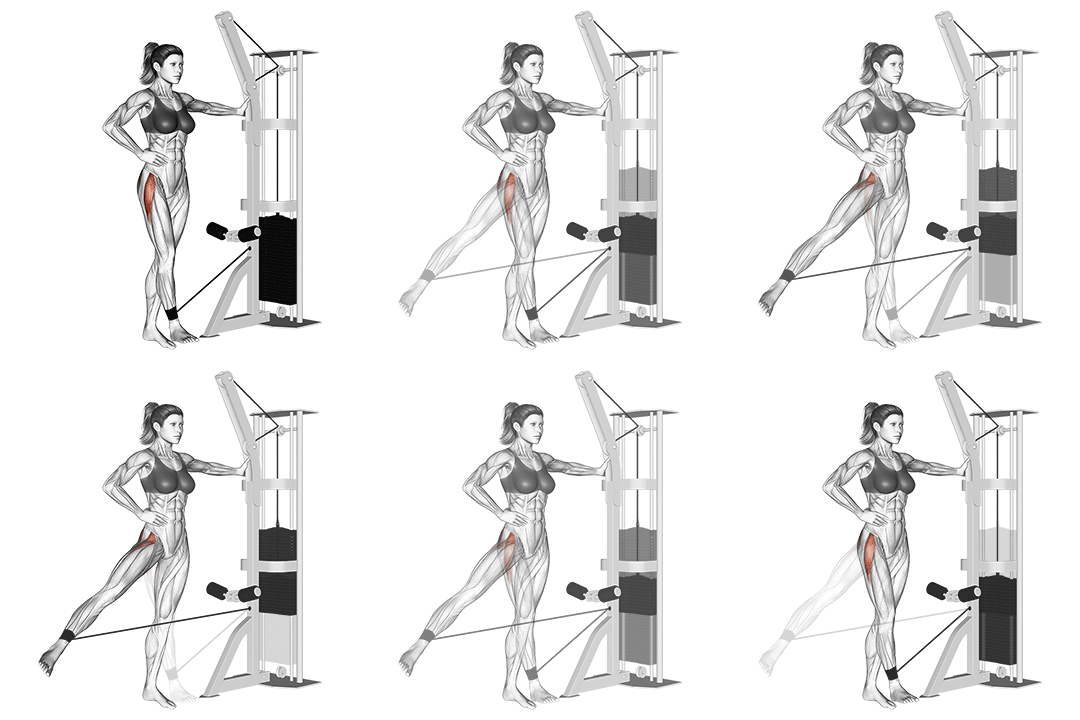
How To Do Standing Hip Abduction With Cable
- Attach an ankle cuff to the low pulley of a cable machine. Select a light to moderate weight to start – you can always increase it once you are comfortable.
- Stand sideways to the machine, with your outside leg (the one farthest from the machine) in the ankle cuff. Your inside leg should be closest to the machine.
- Stand with your feet about hip-width apart, knees slightly bent. Grab the machine or a stable surface with your inside hand for balance.
- Before you even start moving, tighten your abs. Think about pulling your belly button slightly toward your spine.
- Keeping your leg straight (just a slight bend in the knee is fine), lift your strapped leg out to the side. Lead with your heel rather than your toes.
- When your leg reaches its maximum comfortable height (usually about 30-45 degrees), pause for a second and really squeeze those outer hip muscles
- Slowly lower your leg back to the starting position. Don’t just let it drop – the lowering phase is just as important as the lift.
- Complete all reps on one side before switching to the other leg.
Key Form Tips
- Keep your back straight and avoid leaning into the machine or towards the weight.
- Keep your working leg straight, with only a slight bend at the knee.
- Focus on a controlled lift and lower; don’t swing the weight with momentum. Take 2 seconds to lift, pause for 1 second at the top, and take 2-3 seconds to lower
- It’s tempting to turn your foot outward, but this shifts the work to different muscles. Keep your toes pointing straight ahead throughout the movement.
- Keep your abs and oblique muscles active to stabilize your body.
- Your torso should stay vertical. If you find yourself leaning, it usually means the weight is too heavy or your core isn’t engaged enough.
- Stop just before you reach your maximum range of motion; pushing past this might strain your hip joint.
- Don’t hold your breath; remember to exhale as you lift the weight and inhale as you lower it.
Cable Hip Abduction Alternatives
There are several alternatives to cable hip abduction exercises that effectively target the hip muscles.
- Side-Lying Hip Abduction
- Banded Lateral Walk
- Clamshell Exercise
- Cable Donkey Kicks
- Lateral Step-Ups
- Fire Hydrants Exercise
- Band Standing Abductions
- Pilates Side Leg Lifts

Manish is a NASM-certified fitness and nutrition coach with over 10 years of experience in weight lifting and fat loss fitness coaching. He specializes in gym-based training and has a lot of knowledge about exercise, lifting technique, biomechanics, and more.
Through “Fit Life Regime,” he generously shares the insights he’s gained over a decade in the field. His goal is to equip others with the knowledge to start their own fitness journey.