
Rollerblading Calories Calculator
Calculate your calorie burn during inline skating and rollerblading using research-backed MET values
🔥 Your Rollerblading Results
💡 Rollerblading Performance Tips
- Keep your knees slightly bent for better balance and shock absorption
- Swing your arms naturally to maintain momentum and balance
- Look ahead, not down at your feet, for safer skating
- Practice the T-stop and plow stop for safe braking
- Wear protective gear including helmet, wrist guards, and knee pads
How Many Calories Does Rollerblading Burn?
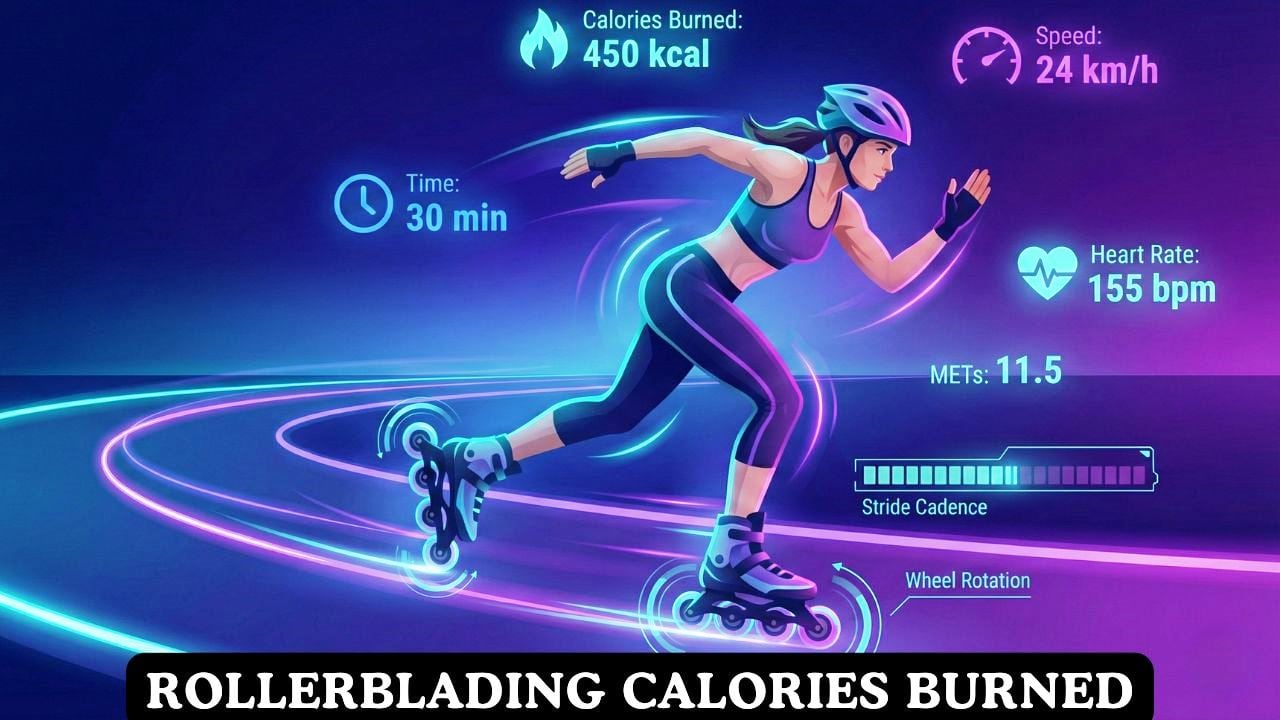
Rollerblading burns between 350 to 1,000+ calories per hour, making it one of the most effective cardiovascular exercises available. A 70 kg (154 lbs) person skating at a recreational pace (around 9 mph) burns approximately 550 calories per hour. At faster speeds of 13-15 mph, calorie burn can exceed 900 calories per hour.
Research from the University of Massachusetts found that inline skating provides the same cardiovascular benefits as running while causing less than 50% of the impact shock to joints. This makes rollerblading an excellent option for those seeking high-calorie burn with lower joint stress.
The Rollerblading Calorie Burn Formula
This calculator uses the scientifically validated MET (Metabolic Equivalent of Task) method from the 2011 Compendium of Physical Activities:
Person: 70 kg | Speed: Recreational (7.5 MET) | Duration: 60 minutes
Calculation: 7.5 × 3.5 × 70 ÷ 200 × 60 = 551 calories
The MET value represents how many times more energy you burn compared to rest. A MET of 7.5 means you’re expending 7.5 times more calories than sitting still. For complementary leg strengthening exercises, visit Fit Life Regime.
Rollerblading Speed & MET Values
The table below shows calorie burn estimates for different skating speeds based on a 70 kg (154 lbs) person for one hour:
| Skating Intensity | Speed | MET | Calories/Hour (70 kg) |
|---|---|---|---|
| Leisurely Pace | 6-8 mph (10-13 km/h) | 5.0 | 368 |
| Recreational Pace | 9-10 mph (14-16 km/h) | 7.5 | 551 |
| Moderate Pace | 11-12 mph (18-19 km/h) | 9.8 | 721 |
| Fast Pace | 13-14 mph (21-23 km/h) | 12.3 | 905 |
| Vigorous/Racing | 15+ mph (24+ km/h) | 14.0 | 1,029 |
Terrain significantly affects calorie burn. Skating uphill or on rougher surfaces increases energy expenditure by 10-25% compared to smooth, flat surfaces.
Key Factors Affecting Calorie Burn
- Body Weight: Heavier individuals burn more calories as more energy is needed to move greater mass
- Skating Speed: Faster speeds dramatically increase calorie expenditure due to wind resistance and power demands
- Terrain: Hills and rough surfaces require more effort, increasing calorie burn by 10-25%
- Skating Technique: Efficient strokes maximize distance and calorie burn per effort
- Wind Conditions: Headwinds can increase effort by 20-30%, boosting calorie expenditure
- Wheel Size & Bearings: Larger wheels and quality bearings reduce rolling resistance but allow higher speeds
Rollerblading vs Other Cardio Exercises
How does inline skating compare to other popular cardio workouts? Here’s a comparison for a 70 kg person exercising for 60 minutes:
| Activity | MET | Calories/Hour | Joint Impact |
|---|---|---|---|
| Rollerblading (moderate) | 9.8 | 721 | Low |
| Running (6 mph) | 9.8 | 721 | High |
| Cycling (12-14 mph) | 8.0 | 588 | Very Low |
| Swimming (moderate) | 7.0 | 515 | None |
| Walking (3.5 mph) | 3.5 | 257 | Low |
| Jump Rope | 11.0 | 809 | High |
Rollerblading offers similar calorie burn to running but with significantly less joint impact. For building leg strength without equipment, check out these exercises at Fit Life Regime.
Frequently Asked Questions
Yes, rollerblading is excellent for weight loss. At moderate intensity, you can burn 500-700 calories per hour, making it comparable to running. The activity is also low-impact, meaning you can do it more frequently without excessive joint stress. Combined with a balanced diet, regular inline skating sessions can create the calorie deficit needed for sustainable weight management.
This calculator uses scientifically validated MET values from the 2011 Compendium of Physical Activities, providing estimates within 10-15% of actual energy expenditure for most people. Individual factors like fitness level, body composition, and skating efficiency can cause variations. For more precise measurements, consider using a heart rate monitor during your sessions.
At comparable effort levels, rollerblading and running burn similar calories. However, experienced skaters can often maintain higher speeds with less perceived effort, potentially burning more total calories over a session. The key advantage of rollerblading is the reduced joint impact – about 50% less than running – allowing for longer, more frequent workouts.
For maximum sustainable calorie burn, aim for a moderate to fast pace of 11-14 mph (18-23 km/h). At this speed range, you burn 700-900 calories per hour while still being able to maintain the pace for extended periods. Beginners should start at 8-10 mph and gradually increase speed as fitness improves.
For general fitness, aim for 30-60 minutes of skating, 3-4 times per week. Beginners might start with 20-30 minute sessions and build up. For weight loss goals, sessions of 45-60 minutes at moderate intensity are most effective. Always include 5-10 minutes of warm-up skating at a leisurely pace before increasing intensity.

Manish is a NASM-certified fitness and nutrition coach with over 10 years of experience in weight lifting and fat loss fitness coaching. He specializes in gym-based training and has a lot of knowledge about exercise, lifting technique, biomechanics, and more.
Through “Fit Life Regime,” he generously shares the insights he’s gained over a decade in the field. His goal is to equip others with the knowledge to start their own fitness journey.