
📐 Body Frame Size Calculator
Determine your body frame type (small, medium, or large) using wrist circumference and height measurements
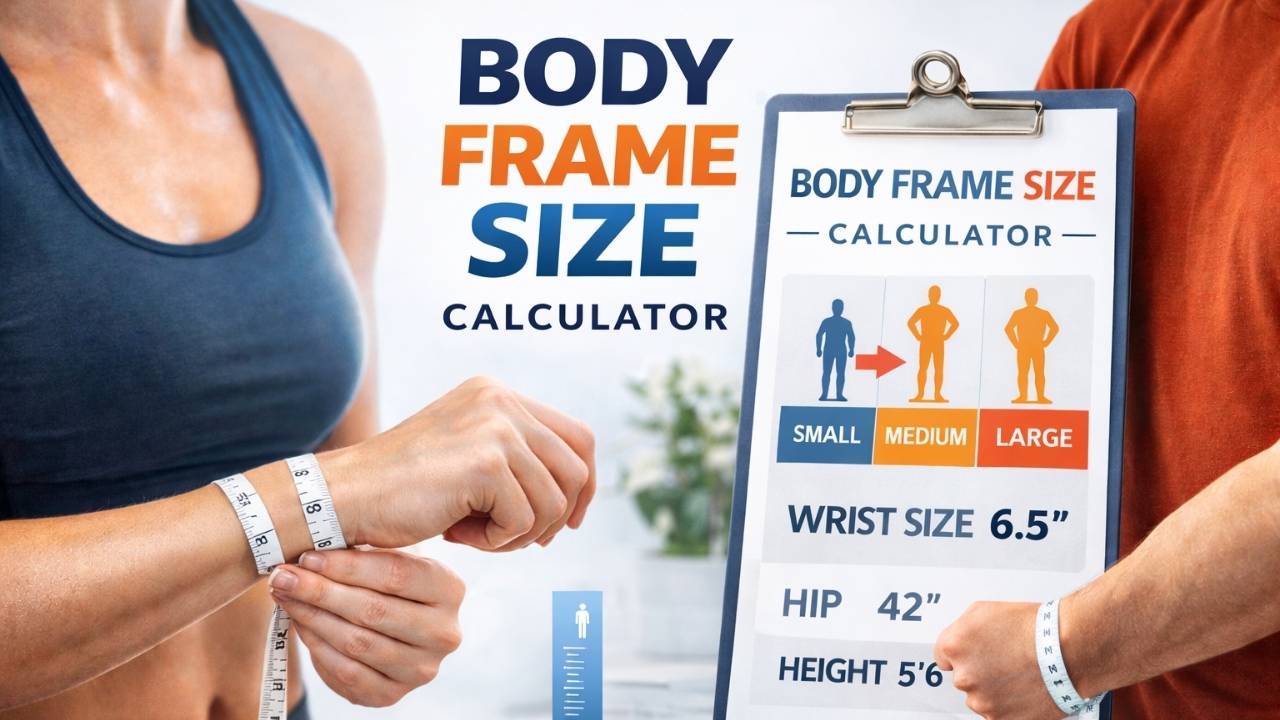
📊 Your Body Frame Results
Frame Size Comparison
💡 What Your Frame Size Means
- Frame size affects your ideal body weight range
- Larger frames can carry more muscle and weight
- Use frame size to adjust weight goals appropriately
- Frame size is determined by bone structure, not body fat
What is Body Frame Size?
Body frame size refers to the skeletal structure that forms the foundation of your body. It’s determined by bone width and density, which doesn’t change regardless of how much weight you gain or lose. Understanding your frame size helps set realistic weight goals and provides context for other body measurements.
People are typically classified into three frame categories: small, medium, or large. Someone with a large frame has wider bones and can naturally carry more weight than someone with a small frame at the same height. This is why standard weight charts often include frame size adjustments. Research published in the American Journal of Clinical Nutrition has explored various methods for assessing body frame size.
Methods for Determining Frame Size
This calculator uses two established methods for determining body frame size:
The wrist measurement method is popular because the wrist has minimal fat and muscle, making it a reliable indicator of bone structure. Studies in the Indian Journal of Public Health have validated wrist circumference as an effective measure for frame size assessment.
The elbow breadth method measures the width of your elbow joint when your arm is bent at 90 degrees. This measurement, compared against standard values for your height and gender, indicates your frame size. Recent research in Ecology of Food and Nutrition continues to examine the relationship between body frame measurements and overall body composition.
Person: Female, Height 165 cm, Wrist 15.5 cm
Calculation: 165 ÷ 15.5 = 10.65
Result: Ratio of 10.65 indicates a Medium Frame for women
Frame Size Classification Charts
Frame size is determined by comparing your height-to-wrist ratio against established reference values:
| Frame Size | Men (Ratio) | Women (Ratio) |
|---|---|---|
| Small Frame | > 10.4 | > 11.0 |
| Medium Frame | 9.6 – 10.4 | 10.1 – 11.0 |
| Large Frame | < 9.6 | < 10.1 |
Note: A higher ratio indicates a smaller frame (smaller wrist relative to height), while a lower ratio indicates a larger frame (larger wrist relative to height).
Wrist Circumference by Frame Size
Here are typical wrist circumference ranges for different frame sizes:
| Height Range | Small Frame | Medium Frame | Large Frame |
|---|---|---|---|
| Women | |||
| Under 157 cm (5’2″) | < 14.0 cm | 14.0-14.6 cm | > 14.6 cm |
| 157-165 cm (5’2″-5’5″) | < 15.2 cm | 15.2-15.9 cm | > 15.9 cm |
| Over 165 cm (5’5″) | < 15.9 cm | 15.9-16.5 cm | > 16.5 cm |
| Men | |||
| Over 165 cm (5’5″) | < 16.5 cm | 16.5-19.0 cm | > 19.0 cm |
Elbow Breadth Reference Values
If you measured your elbow breadth, compare it to these reference values for medium frame. Values below indicate small frame; values above indicate large frame:
| Height | Men (Medium Frame) | Women (Medium Frame) |
|---|---|---|
| 155-160 cm | 6.4-7.2 cm | 5.6-6.4 cm |
| 160-168 cm | 6.7-7.4 cm | 5.8-6.5 cm |
| 168-175 cm | 6.9-7.6 cm | 5.9-6.6 cm |
| 175-183 cm | 7.0-7.8 cm | 6.1-6.8 cm |
| 183-190 cm | 7.2-8.1 cm | 6.2-6.9 cm |
How to Measure Correctly
Accurate measurements are essential for reliable results:
- Wrist Circumference: Measure just below the wrist bone (the bony bump on the outside of your wrist). Use a flexible tape measure, keeping it snug but not tight
- Elbow Breadth: Bend your arm at 90 degrees with palm facing up. Use calipers or your fingers to find the two prominent bones on either side of your elbow, then measure the distance between them
- Height: Stand straight against a wall without shoes. Mark your height and measure from the floor to the mark
- Consistency: Take measurements at the same time of day for tracking purposes
Why Frame Size Matters
Understanding your body frame size has several practical applications:
- Ideal Weight Calculations: Frame size adjusts ideal body weight ranges—larger frames can carry 10% more weight
- Realistic Goal Setting: Set achievable fitness goals based on your body structure
- Nutrition Planning: Larger frames may have higher calorie needs even at the same weight
- Clothing Fit: Understanding frame size helps with proper clothing selection
- Athletic Performance: Different frame sizes may excel in different sports and exercises
Frame Size and Ideal Body Weight
Many ideal body weight formulas include frame size adjustments. Here’s how frame size typically affects weight ranges:
| Frame Size | Weight Adjustment | Example (70 kg base) |
|---|---|---|
| Small Frame | -10% from base IBW | 63 kg |
| Medium Frame | Base IBW (no adjustment) | 70 kg |
| Large Frame | +10% from base IBW | 77 kg |
This means a person with a large frame can weigh approximately 10% more than someone with a small frame at the same height while still being in a similar body composition range. Combine frame size assessment with body fat percentage for a complete picture.
Characteristics of Each Frame Type
Small Frame:
- Narrower shoulders and hips
- Smaller wrists and ankles
- Often described as “petite” or “slender” build
- May find it easier to appear lean
- Lower end of healthy weight ranges typically appropriate
Medium Frame:
- Proportional bone structure
- Average wrist and ankle size
- Most common frame type
- Standard weight charts apply directly
- Versatile for various fitness activities
Large Frame:
- Broader shoulders and hips
- Larger wrists and ankles
- Often described as “big-boned”
- Can carry more muscle mass naturally
- Higher end of healthy weight ranges may be appropriate
Frequently Asked Questions
No, body frame size is determined by your skeletal structure and cannot be changed through diet or exercise. Your bones reach their adult size by your late teens to early twenties and remain that size throughout life. What you can change is your body composition—the ratio of muscle to fat on your frame. Building muscle through strength training can help you achieve your best physique regardless of frame size.
Both methods are valid, but the wrist circumference method is generally easier to perform accurately at home. The elbow breadth method requires calipers for precise measurement. If both methods give you the same result, you can be confident in your frame size classification. If they differ, the wrist method is typically preferred for self-assessment as it’s less prone to measurement error.
Frame size can influence your potential for muscle development. Larger frames typically have larger muscle attachment points and may have greater potential for overall muscle mass. However, people of all frame sizes can build significant muscle through proper training and nutrition. A smaller frame may actually appear more muscular at lower absolute muscle mass because muscles are more visible on a narrower structure.
Men generally have larger bones and wider frames than women due to hormonal differences during development. Testosterone promotes greater bone density and width, while estrogen influences different growth patterns. This is why the same wrist circumference might indicate a small frame in a man but a medium or large frame in a woman. The ratio thresholds are adjusted to account for these natural differences.
Frame size can be one factor in determining calorie needs, but it’s not the primary determinant. Your total body weight, activity level, and body composition have a greater impact on calorie requirements. However, if you’re using ideal body weight to calculate needs, adjusting for frame size (±10%) provides a more personalized target. A person with a large frame at their ideal weight will have higher calorie needs than someone with a small frame at the same height.
If your ratio falls on the border between two categories, you likely have a frame that’s between sizes—this is completely normal. You might describe yourself as “small-medium” or “medium-large.” For practical purposes, you can use the midpoint of the two categories’ weight adjustments. Remember that these categories are guidelines, not strict boundaries, and individual variation is expected.

Manish is a NASM-certified fitness and nutrition coach with over 10 years of experience in weight lifting and fat loss fitness coaching. He specializes in gym-based training and has a lot of knowledge about exercise, lifting technique, biomechanics, and more.
Through “Fit Life Regime,” he generously shares the insights he’s gained over a decade in the field. His goal is to equip others with the knowledge to start their own fitness journey.