
Volleyball Calories Burned Calculator
Calculate energy expenditure for indoor and beach volleyball using validated MET values
How Many Calories Does Volleyball Burn?
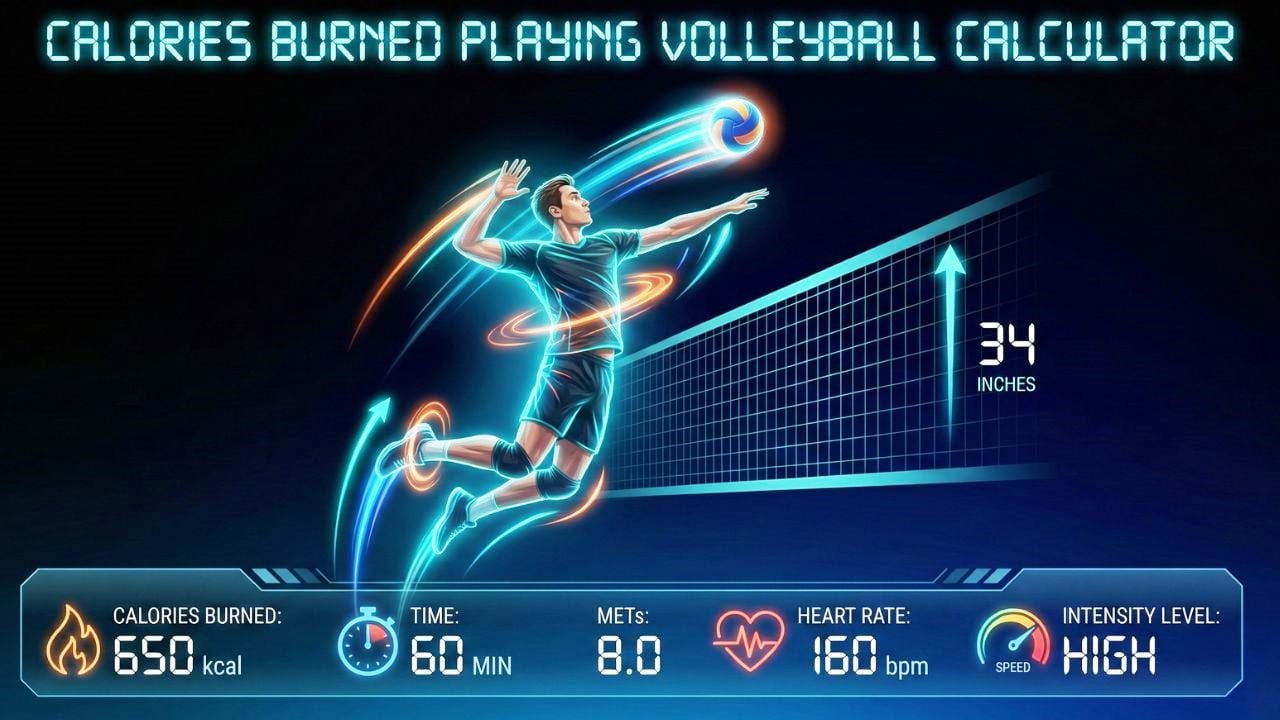
Volleyball burns between 220-590 calories per hour depending on the format, intensity, and your body weight. Indoor recreational volleyball burns approximately 220-295 calories per hour, while competitive indoor matches burn around 440 calories. Beach volleyball is the most demanding format, burning approximately 590 calories per hour due to the added resistance of moving in sand.
As a team sport combining cardiovascular exercise with explosive movements, volleyball provides excellent physical fitness benefits. The constant jumping, diving, lateral shuffling, and arm swings engage multiple muscle groups while keeping your heart rate elevated throughout play.
Key factors that determine calorie burn:
- Volleyball format: Beach volleyball burns nearly double indoor recreational play
- Body weight: Heavier players burn more calories at the same intensity
- Playing position: Setters and hitters move more than defensive specialists
- Match intensity: Competitive games demand more energy than casual play
- Playing time: Longer sessions accumulate more total calorie burn
Understanding Volleyball Calorie Calculation
This calculator uses MET (Metabolic Equivalent of Task) values from the 2024 Compendium of Physical Activities, the most authoritative source for activity energy expenditure data. METs measure how much energy an activity burns compared to resting.
Calories/min = 6.0 × 3.5 × 70 ÷ 200 = 7.35 calories/minute
Total = 7.35 × 60 = 441 calories
The calculator applies multipliers for position, skill level, and game intensity to provide personalized estimates that reflect real-world playing conditions.
Volleyball MET Values by Format
Different volleyball formats require varying levels of effort due to factors like court surface, number of players, and competitive intensity. Here’s a breakdown based on the 2024 Compendium of Physical Activities:
| Volleyball Format | MET Value | Calories/Hour (70kg) | Intensity Level |
|---|---|---|---|
| Recreational (6-9 players) | 3.0 METs | ~220 cal | Light |
| General play (standard) | 4.0 METs | ~294 cal | Moderate |
| Competitive (gymnasium) | 6.0 METs | ~441 cal | Vigorous |
| Beach volleyball (sand) | 8.0 METs | ~588 cal | Very Vigorous |
Why beach volleyball burns more: Playing in sand requires 1.6-2.2 times more energy than hard surfaces due to the unstable footing. Your leg muscles work significantly harder to generate power for jumps and lateral movements when the surface gives way beneath you.
Volleyball Compared to Other Sports
Here’s how volleyball stacks up against other popular sports for a 70kg person playing for one hour:
- Beach Volleyball (8.0 MET): ~588 cal/hour – Highest due to sand resistance
- Basketball Game (8.0 MET): ~588 cal/hour – Continuous running and jumping
- Tennis Singles (8.0 MET): ~588 cal/hour – High movement demands
- Competitive Volleyball (6.0 MET): ~441 cal/hour – Intense match play
- Soccer Casual (7.0 MET): ~514 cal/hour – Continuous field movement
- Recreational Volleyball (3.0 MET): ~220 cal/hour – Lighter activity level
Volleyball provides an excellent balance of cardiovascular exercise, strength training, and skill development while being easier on joints than high-impact running sports.

Manish is a NASM-certified fitness and nutrition coach with over 10 years of experience in weight lifting and fat loss fitness coaching. He specializes in gym-based training and has a lot of knowledge about exercise, lifting technique, biomechanics, and more.
Through “Fit Life Regime,” he generously shares the insights he’s gained over a decade in the field. His goal is to equip others with the knowledge to start their own fitness journey.