
⏰ Intermittent Fasting Calculator
Create your personalized intermittent fasting schedule with eating windows, meal timing, and calorie targets based on scientific research and your lifestyle.
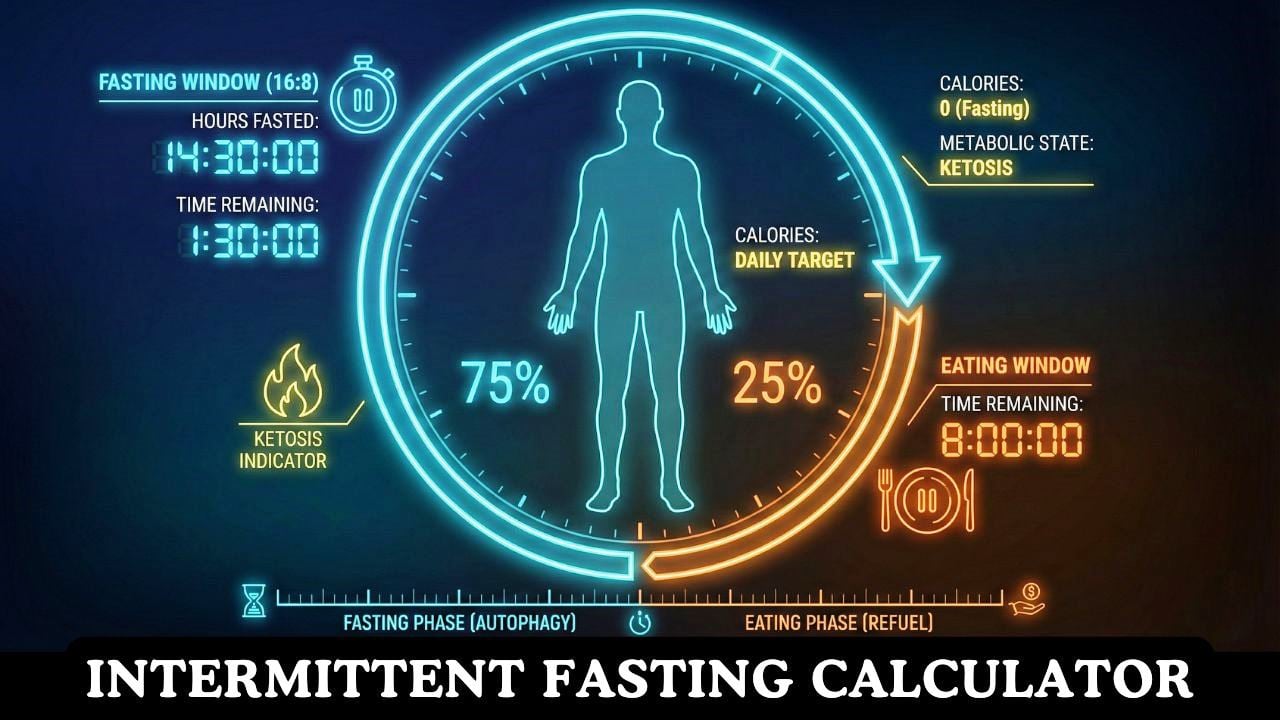
Intermittent Fasting Science
Intermittent fasting (IF) is an eating pattern that cycles between periods of fasting and eating. Unlike traditional diets that focus on *what* you eat, IF focuses on *when* you eat. Research published in the New England Journal of Medicine shows IF triggers cellular repair processes, improves metabolic health, and may extend lifespan.
During fasting periods, your body shifts from using glucose as primary fuel to burning stored fat for energy. This metabolic switch typically occurs after 12-16 hours of fasting and provides numerous health benefits beyond weight loss.
The Science Behind Fasting Benefits
Autophagy (Cellular Cleanup): Fasting triggers autophagy, a process where cells remove damaged components and recycle them. Studies show autophagy begins around 16-24 hours of fasting and peaks at 48-72 hours.
Insulin Sensitivity: IF significantly improves insulin sensitivity and reduces insulin levels. Lower insulin allows your body to access fat stores more easily for energy.
Human Growth Hormone (HGH): Fasting can increase HGH by 300-500%, promoting fat loss and muscle preservation. Track your strength progress with our one rep max calculator.
Fat Oxidation: After 12-16 hours of fasting, your body switches to burning fat as primary fuel, enhancing weight loss and metabolic health.
Popular Intermittent Fasting Protocols
| Protocol | Fasting | Eating | Difficulty | Best For |
|---|---|---|---|---|
| 14:10 | 14 hours | 10 hours | Easy | Beginners |
| 16:8 | 16 hours | 8 hours | Moderate | Most people, fat loss |
| 18:6 | 18 hours | 6 hours | Moderate-Hard | Experienced fasters |
| 20:4 | 20 hours | 4 hours | Hard | Advanced, maximum fat loss |
| OMAD (23:1) | 23 hours | 1 hour | Very Hard | Extreme discipline, autophagy |
| 5:2 | 2 days/week | 5 days normal | Moderate | Flexible lifestyle |
| Alternate Day | Every other day | Every other day | Hard | Research protocols, longevity |
Common Intermittent Fasting Mistakes
1. Overeating During Eating Window: IF doesn’t mean unlimited calories. You still need a calorie deficit for fat loss. Calculate your needs with our TDEE calculator.
2. Not Drinking Enough Water: Dehydration is common during fasting. Aim for 2-3 liters daily. Thirst is often mistaken for hunger.
3. Too Low Protein Intake: Must hit protein targets to preserve muscle during fasting. Aim for 1.6-2.2g per kg body weight (0.7-1.0g per lb). Use our protein calculator.
4. Starting Too Aggressive: Begin with 14:10 or 16:8, not OMAD. Your body needs adaptation time (2-3 weeks).
5. Breaking Fast with Junk Food: Start with easily digestible, nutrient-dense foods. Poor food choices negate IF benefits.
6. Ignoring Sleep: Poor sleep (< 7 hours) disrupts hormones and makes fasting harder. Sleep affects cortisol and ghrelin (hunger hormone).
Intermittent Fasting for Weight Loss
IF works for weight loss primarily through calorie restriction and metabolic advantages. A 2020 systematic review found IF produces 3-8% weight loss over 3-24 weeks, with most fat loss occurring from visceral (belly) fat.
Why IF Works for Fat Loss:
• Natural calorie restriction (fewer eating opportunities)
• Enhanced fat burning during fasting state
• Improved insulin sensitivity
• Increased metabolic rate (4-14% boost)
• Preserved muscle mass better than standard calorie restriction
Expected Weight Loss: 0.25-1kg (0.5-2 lbs) per week is healthy and sustainable. Calculate your weight loss timeline with our weight loss calculator.
Combining IF with Exercise
Fasted Training Benefits:
• Enhanced fat oxidation during exercise
• Improved insulin sensitivity
• Increased growth hormone production
• Better for endurance and moderate cardio
Fed Training Benefits:
• Better strength performance
• Higher training volume capacity
• Faster recovery
• Ideal for heavy weightlifting
Recommendation: For strength training, eat 1-2 hours before workout. For cardio, fasted training is fine. Always refuel with protein + carbs within 2 hours post-workout. Plan workouts with our workout generator.
Frequently Asked Questions
Q: Will I lose muscle doing intermittent fasting?
A: No, if you eat adequate protein (1.6-2.2g/kg or 0.7-1.0g/lb body weight) and do resistance training. Research shows IF preserves muscle as well as or better than standard diets when protein intake is sufficient.
Q: Can I drink coffee during fasting?
A: Yes! Black coffee is fine and actually beneficial. It suppresses appetite, boosts fat burning, and doesn’t break your fast. No cream, sugar, or sweeteners.
Q: How long until I see results?
A: Most people notice benefits in 2-4 weeks: better energy, mental clarity, some fat loss. Significant body composition changes take 8-12 weeks with consistency.
Q: Is 16:8 better than other protocols?
A: 16:8 is most popular because it’s sustainable and effective. Research shows similar benefits across protocols – choose what fits your lifestyle best.
Q: Can women do intermittent fasting?
A: Yes, but women may need slightly shorter fasts (14-16h vs 16-18h for men) due to hormone sensitivity. Monitor menstrual cycle regularity. If disrupted, reduce fasting duration.
Related Fitness Tools
Nutrition: TDEE Calculator | Macro Calculator | Protein Calculator | Weight Loss Calculator
Body Composition: Body Fat Calculator | BMI Calculator | Lean Mass Calculator
Training: Workout Generator | 1RM Calculator
Medical Disclaimer
This Intermittent Fasting Calculator provides general information and schedule recommendations based on your inputs. It is not medical advice and should not replace professional consultation. Intermittent fasting may not be appropriate for everyone, especially those with certain medical conditions, pregnant/breastfeeding women, children, or those with eating disorder history.
Individual results vary based on adherence, starting health status, lifestyle factors, and metabolic differences. Consult with healthcare providers, registered dietitians, or certified nutrition specialists before starting any new eating pattern, especially if you have medical conditions or take medications.

Manish is a NASM-certified fitness and nutrition coach with over 10 years of experience in weight lifting and fat loss fitness coaching. He specializes in gym-based training and has a lot of knowledge about exercise, lifting technique, biomechanics, and more.
Through “Fit Life Regime,” he generously shares the insights he’s gained over a decade in the field. His goal is to equip others with the knowledge to start their own fitness journey.