
🫁 VO2 Max Calculator
Calculate your aerobic capacity and cardiovascular fitness level with scientifically validated testing methods
What is VO2 Max & Why It Matters
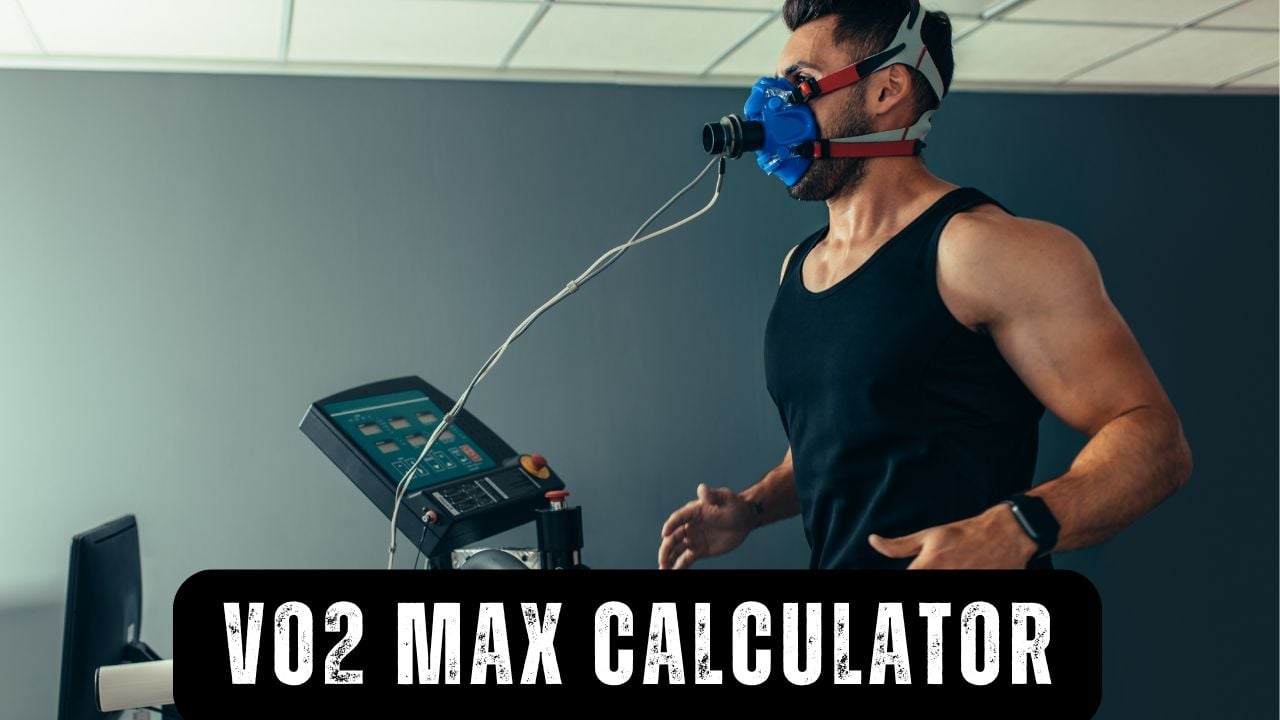
VO2 Max (maximal oxygen uptake) is the maximum amount of oxygen your body can consume during intense exercise, measured in milliliters per kilogram of body weight per minute (ml/kg/min). It represents the upper limit of your cardiovascular system’s ability to deliver oxygen to working muscles and your muscles’ capacity to use that oxygen for energy production.
Research published in the Journal of the American College of Cardiology demonstrates that VO2 Max is one of the strongest predictors of cardiovascular health and longevity. Each 1 MET (3.5 ml/kg/min) increase in aerobic capacity is associated with a 13-15% reduction in mortality risk.
VO2 Max testing is the gold standard for assessing cardiorespiratory fitness in athletes, clinical populations, and general fitness enthusiasts. Elite endurance athletes like marathon runners and cyclists typically have VO2 Max values exceeding 70 ml/kg/min, while sedentary individuals average 35-45 ml/kg/min. Learn more about physical fitness benefits and how aerobic training impacts your health.
VO2 Max Testing Methods
💓 Resting Heart Rate Method
The Resting Heart Rate (RHR) method provides a simple, non-exercise estimate of VO2 Max based on the inverse relationship between resting heart rate and cardiovascular fitness. Research demonstrates that trained individuals have lower resting heart rates due to increased stroke volume and cardiac efficiency.
How it works: Measure your heart rate immediately upon waking, before getting out of bed. Use a heart rate monitor or manually count your pulse for 60 seconds. Normal resting heart rate ranges from 60-100 bpm, with athletes often displaying rates of 40-60 bpm. The formula uses your resting HR, age, and sex to estimate aerobic capacity.
Accuracy Note: While convenient, the RHR method has ±15-20% variability as resting heart rate is influenced by multiple factors including hydration, stress, caffeine, medications, and genetics. It’s best used for tracking trends over time rather than absolute values.
HRmax = 220 – Age
Female adjustment: VO2 Max × 0.88
Example: 30-year-old male with 60 bpm resting HR:
HRmax = 220 – 30 = 190 bpm
VO2 Max = 15.3 × (190 / 60) = 48.5 ml/kg/min
🏃 Cooper 12-Minute Run Test
The Cooper Test, developed by Dr. Kenneth Cooper in 1968, estimates VO2 Max based on the distance you can cover in 12 minutes of continuous running. This field test is widely used by military organizations, athletic teams, and fitness programs worldwide.
How it works: Run or jog as far as possible in exactly 12 minutes on a measured track. The formula calculates VO2 Max from your total distance covered. Average performances range from 1.2-1.5 miles for recreational runners to 2+ miles for elite athletes.
Example: If you run 2,400 meters in 12 minutes:
VO2 Max = (2400 – 504.9) / 44.73 = 42.4 ml/kg/min
🚶 Rockport 1-Mile Walk Test
The Rockport Walking Test provides a safer, lower-impact alternative to running tests, making it ideal for beginners, older adults, and individuals with joint concerns. This validated submaximal test uses your walk time, heart rate, age, sex, and body weight to estimate VO2 Max.
How it works: Walk 1 mile as quickly as possible while maintaining a steady pace. Record your completion time and immediately measure your heart rate. Studies show the Rockport Test correlates highly (r = 0.88-0.93) with laboratory VO2 Max measurements.
*Sex: Male = 1, Female = 0
Example: 35-year-old male, 180 lbs, 15-minute walk, 145 bpm:
VO2 Max = 132.853 – (13.84) – (13.57) + (6.315) – (48.97) – (22.69) = 40.1 ml/kg/min
VO2 Max Fitness Standards by Age & Sex
| Age Group | Sex | Superior | Excellent | Good | Fair | Poor |
|---|---|---|---|---|---|---|
| 20-29 | Male | ≥56 | 47-55 | 42-46 | 37-41 | <37 |
| 20-29 | Female | ≥50 | 40-49 | 35-39 | 30-34 | <30 |
| 30-39 | Male | ≥54 | 44-53 | 40-43 | 35-39 | <35 |
| 30-39 | Female | ≥48 | 38-47 | 33-37 | 28-32 | <28 |
| 40-49 | Male | ≥52 | 42-51 | 38-41 | 33-37 | <33 |
| 40-49 | Female | ≥45 | 36-44 | 31-35 | 26-30 | <26 |
| 50-59 | Male | ≥48 | 39-47 | 35-38 | 30-34 | <30 |
| 50-59 | Female | ≥41 | 33-40 | 28-32 | 23-27 | <23 |
| 60+ | Male | ≥43 | 36-42 | 31-35 | 26-30 | <26 |
| 60+ | Female | ≥37 | 30-36 | 25-29 | 20-24 | <20 |
Note: Classifications based on American College of Sports Medicine (ACSM) standards and Cooper Institute research. Values are in ml/kg/min. Individual variation exists based on genetics, training history, and lifestyle factors.
How to Improve Your VO2 Max
🏃 High-Intensity Interval Training (HIIT)
HIIT workouts are the most effective method for improving VO2 Max. Research shows that 4-8 minutes of high-intensity intervals (90-95% max heart rate) with recovery periods can increase VO2 Max by 10-15% in just 8 weeks.
Example Protocol: 4-minute intervals at 90-95% max HR, followed by 3 minutes active recovery. Repeat 4-6 times, 2-3 times per week. Check our HIIT calories calculator for workout tracking.
🚴 Long, Steady-State Cardio
Sustained aerobic exercise at 60-75% max HR builds your cardiovascular base and increases mitochondrial density. Aim for 30-60 minute sessions 3-5 times weekly. Activities include running, cycling, swimming, and rowing.
Studies show consistent aerobic training increases VO2 Max by 5-20% depending on initial fitness level. Beginners see the largest improvements. Explore running calorie burn and cycling calorie expenditure.
💪 Strength Training
While primarily for muscular strength, resistance training improves oxygen utilization in muscles and supports cardiovascular adaptations. Circuit training combining strength and cardio is particularly effective.
Research indicates that adding 2-3 strength sessions weekly to aerobic training yields greater VO2 Max improvements than cardio alone. See our circuit training calculator.
VO2 Max Assessment FAQs
❓ What is a good VO2 Max for my age?
For men, average VO2 Max ranges from 42-46 ml/kg/min (ages 20-29) declining to 31-35 ml/kg/min (60+). For women, ranges are 35-39 ml/kg/min (20-29) to 25-29 ml/kg/min (60+). “Good” fitness is typically 5-10 points above these averages, while “excellent” is 10-15 points above. Elite endurance athletes reach 70-85+ ml/kg/min regardless of age.
💓 How accurate are field tests vs lab tests?
Laboratory VO2 Max testing using metabolic carts and treadmill protocols is the gold standard with ±2% accuracy. Field tests like Cooper and Rockport have ±10-15% variability due to pacing strategy, environmental conditions, and individual testing experience. The Resting Heart Rate method has ±15-20% variability as it’s influenced by stress, hydration, caffeine, and genetics. However, all field tests are excellent for tracking progress over time and require minimal equipment.
🫀 How accurate is the Resting Heart Rate method?
The Resting Heart Rate method (Uth et al., 2004) has a moderate correlation (r = 0.6-0.7) with laboratory-measured VO2 Max, making it less accurate than exercise-based tests like Cooper or Rockport (r = 0.85-0.93). However, it’s excellent for tracking fitness improvements over time as training typically reduces resting HR by 5-15 bpm. For best accuracy, measure your RHR consistently in the morning before getting out of bed. Factors like stress, illness, dehydration, alcohol, and medications can temporarily elevate RHR by 5-20 bpm, affecting results.
⏱️ How quickly can I improve my VO2 Max?
Beginners can see 15-25% improvements in 8-12 weeks of consistent training. Well-trained individuals may improve 5-10% over several months. Genetics account for 20-50% of VO2 Max variability, but training always produces measurable gains. Most improvements occur in the first 3 months of structured aerobic training, with diminishing returns afterward.
🏋️ Does body weight affect VO2 Max?
Yes, significantly. VO2 Max is expressed per kilogram of body weight, so weight loss improves your relative VO2 Max even without fitness changes. A 10kg weight reduction can increase relative VO2 Max by 3-5 ml/kg/min. However, extreme weight loss can reduce absolute oxygen consumption if muscle mass decreases. Optimal body composition combines low fat mass with adequate muscle mass.
🎯 Should I retest my VO2 Max?
Test every 8-12 weeks during training cycles to track progress. More frequent testing (monthly) can help fine-tune training intensity zones. Ensure consistent testing conditions: time of day, hydration status, recovery state, and testing protocol. Use the same method each time for valid comparisons. Seasonal variations of 3-5% are normal even with consistent training.
🏃 What’s the relationship between VO2 Max and race performance?
VO2 Max strongly correlates with endurance performance but isn’t the only factor. Running economy (energy cost at submaximal speeds), lactate threshold, and mental toughness also matter. Two runners with identical VO2 Max can have vastly different race times. Elite marathoners combine high VO2 Max (70-85) with exceptional running economy and high lactate threshold (85-95% VO2 Max).
⚕️ Medical & Testing Disclaimer
This VO2 Max calculator provides estimates based on validated exercise physiology formulas and should not replace professional medical assessment or laboratory testing. Field tests like Cooper and Rockport have inherent variability and may not be suitable for individuals with cardiovascular disease, respiratory conditions, musculoskeletal injuries, or other health concerns.
Consult your physician before performing maximal or submaximal exercise testing, especially if you have risk factors for heart disease, are sedentary, over 40 years old (men) or 50 years old (women), or have any chronic medical conditions. Maximal exercise testing should ideally be conducted under medical supervision with appropriate emergency equipment available.
For clinical populations or athletes requiring precise VO2 Max measurement, laboratory testing with metabolic carts and ECG monitoring is recommended. This calculator is for educational and fitness tracking purposes only.
Related
- Barbell Racking Calculator
- Push-Up Weight Calculator
- Wilks Calculator
- One-Rep (1RM) Max Calculator
- One-Rep Max (1RM) Bench Press Calculator
- Body Fat Calculator
References
- Tanaka, H., Monhan, K.D., Seals, D.G., Age-predicted maximal heart rate revisited. Am Coll Cardiol 2001; 37:153-156.
- Uth N, Sorensen H, Overgaard K, Pedersen PK. Estimation of VO2max from the ratio between HRmax and HRrest–the Heart Rate Ratio Method. Eur J Appl Physiol. 2004 Jan;91(1):111-5.
- Kieu NTV, Jung SJ, Shin SW, Jung HW, Jung ES, Won YH, Kim YG, Chae SW. The Validity of the YMCA 3-Minute Step Test for Estimating Maximal Oxygen Uptake in Healthy Korean and Vietnamese Adults. J Lifestyle Med. 2020 Jan 31;10(1):21-29. doi: 10.15280/jlm.2020.10.1.21. PMID: 32328445; PMCID: PMC7171059.
- Larsen, Gary & George, James & Alexander, Jeffrey & Fellingham, Gilbert & Aldana, Steve & Parcell, Allen. (2002). Prediction of Maximum Oxygen Consumption from Walking, Jogging, or Running. Research quarterly for exercise and sport. 73. 66-72. 10.1097/00005768-200205001-00022.
- Kilne G, et al. “Estimation of VO2 max from a one mile track walk, gender, age and body weight“. Med. Sci. Sports Exerc. 1987, 19: 253–259.
- Fahey, T., Insel, P., Roth, W., Fit & Well: Core Concepts and Labs in Physical Fitness and Wellness (Seventh Edition), McGraw-Hill, 2007.

Manish is a NASM-certified fitness and nutrition coach with over 10 years of experience in weight lifting and fat loss fitness coaching. He specializes in gym-based training and has a lot of knowledge about exercise, lifting technique, biomechanics, and more.
Through “Fit Life Regime,” he generously shares the insights he’s gained over a decade in the field. His goal is to equip others with the knowledge to start their own fitness journey.