
Cycling Heart Rate Zone Calculator
Calculate your personalized training zones for optimal cycling performance
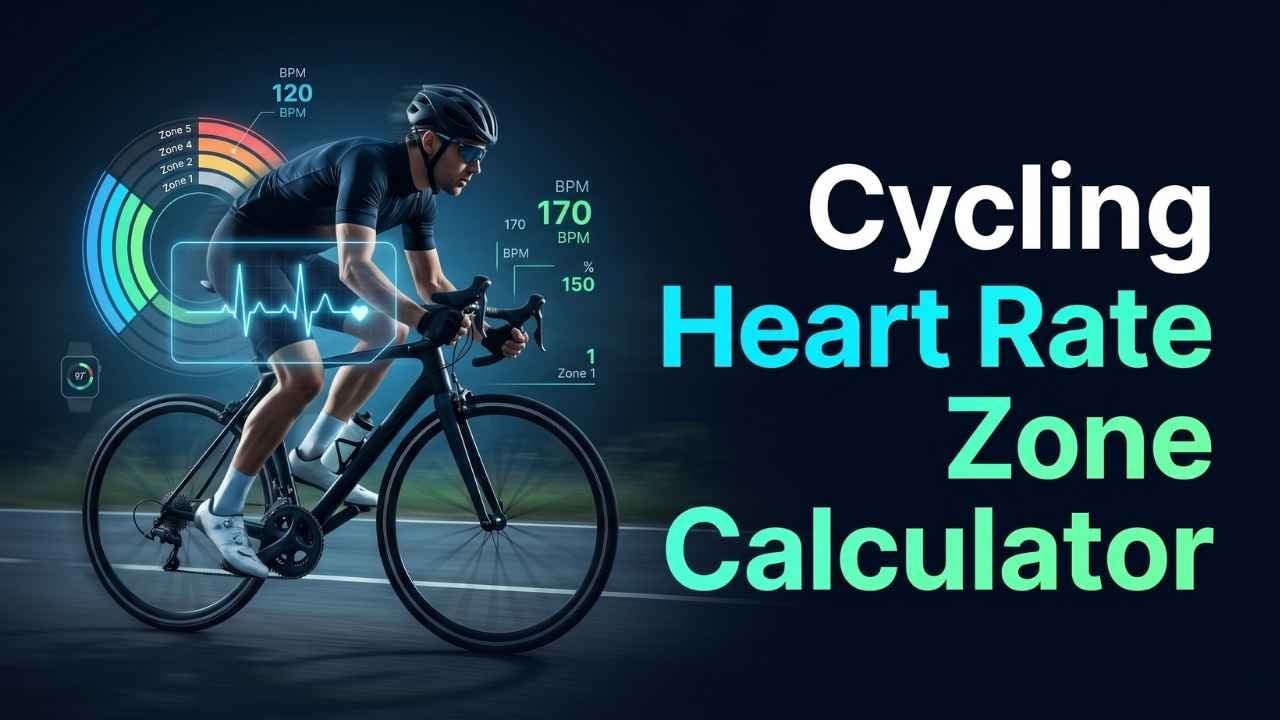
Understanding Cycling Heart Rate Training Zones
Heart rate zone training is a proven method for improving cycling performance and fitness. By training in specific heart rate zones, you can target different energy systems and achieve specific adaptations—from building endurance to increasing power output.
Research published in Sports (MDPI) shows that monitoring heart rate during cycling provides valuable insights into exercise intensity and energy expenditure, helping athletes optimize their training.
Heart Rate Zone Calculation Formulas
Note: The Tanaka formula (2001) is considered more accurate for active individuals than the traditional 220-Age formula.
Heart Rate Reserve (HRR) = HRmax – HRrest
This method accounts for your resting heart rate, providing more personalized training zones.
HRmax (Tanaka) = 208 – (0.7 × 35) = 183.5 ≈ 184 bpm
Heart Rate Reserve = 184 – 60 = 124 bpm
Zone 3 (70-80% intensity) using Karvonen:
Lower: (124 × 0.70) + 60 = 147 bpm
Upper: (124 × 0.80) + 60 = 159 bpm
The 5 Cycling Training Zones
| Zone | Name | % of Max HR | % of HRR | Training Benefit |
|---|---|---|---|---|
| 1 | Recovery | 50-60% | 50-60% | Active recovery, warm-up |
| 2 | Endurance | 60-70% | 60-70% | Base fitness, fat burning |
| 3 | Tempo | 70-80% | 70-80% | Aerobic capacity, efficiency |
| 4 | Threshold | 80-90% | 80-90% | Lactate threshold, power |
| 5 | VO2max | 90-100% | 90-100% | Maximum capacity, speed |
Training Tip: Most cycling training (70-80%) should be in Zones 1-2 for building base fitness. High-intensity Zone 4-5 work should be limited to 10-20% of training time.
Benefits of Zone-Based Cycling Training
🎯 Targeted Adaptations
Each zone stimulates specific physiological adaptations—from improved fat oxidation in Zone 2 to increased leg power in Zone 4.
⚡ Prevent Overtraining
Zone training ensures you don’t push too hard on easy days, allowing proper recovery between intense sessions.
📈 Track Progress
As fitness improves, you’ll notice lower heart rates at the same power outputs—a clear sign of cardiovascular adaptation.
🚴 Race Preparation
Understanding your zones helps pace efforts during training and races for optimal performance.
How to Measure Resting Heart Rate
- Measure first thing in the morning before getting out of bed
- Stay lying down and relax for 1-2 minutes
- Count your pulse for 60 seconds (or 30 seconds × 2)
- Take readings for 3-5 days and average the results
- Avoid measuring after caffeine, alcohol, or stressful events
Typical values: Untrained adults: 60-80 bpm | Fit cyclists: 45-60 bpm | Elite athletes: 35-50 bpm
Frequently Asked Questions
What is the best zone for fat burning during cycling?
Zone 2 (60-70% of max HR) is optimal for fat oxidation. At this intensity, your body uses a higher percentage of fat for fuel. However, higher zones burn more total calories per minute, so both approaches have merit depending on your goals.
Should I use the percentage method or Karvonen method?
If you know your resting heart rate, the Karvonen method provides more personalized zones by accounting for your cardiac fitness. The percentage method is simpler and works well for general training guidance.
How do I find my actual maximum heart rate?
The most accurate method is a supervised maximal exercise test. Alternatively, perform a field test: after a thorough warm-up, do a 3-minute all-out effort on a steep hill. Your peak heart rate near the end approximates your max HR.
Why are my zones different from other calculators?
Different calculators use different formulas and zone definitions. This calculator uses the Tanaka formula (208 – 0.7 × age) which research shows is more accurate than the traditional 220 – age formula, especially for trained individuals.
How much time should I spend in each zone?
The 80/20 polarized training model suggests spending about 80% of training time in Zones 1-2 and 20% in Zones 4-5. Zone 3 (“tempo”) should be used sparingly as it creates fatigue without maximizing aerobic or anaerobic adaptations.
Scientific References
- Nakagata, T., et al. (2019). Heart Rate Responses and Exercise Intensity During A Prolonged 4-Hour Individual Cycling Race. Sports, 7(5), 109. PMC
- Tanaka, H., Monahan, K.D., & Seals, D.R. (2001). Age-predicted maximal heart rate revisited. Journal of the American College of Cardiology, 37(1), 153-156. PubMed
- Garber, C.E., et al. (2011). ACSM Position Stand: Quantity and Quality of Exercise. Medicine & Science in Sports & Exercise, 43(7), 1334-1359.
- Karvonen, M.J., Kentala, E., & Mustala, O. (1957). The effects of training on heart rate. Annales Medicinae Experimentalis et Biologiae Fenniae, 35(3), 307-315.
⚠️ Important Notice
This calculator provides estimates based on established formulas for educational purposes. Individual heart rate responses vary based on genetics, fitness level, and other factors. For personalized training guidance, consider professional fitness testing. Always listen to your body and consult qualified professionals before starting or modifying any exercise program.
Cycling Heart Rate Zones
' + 'Calculation Method: ' + (data.method === 'karvonen' ? 'Karvonen (Heart Rate Reserve)' : 'Percentage of Max HR') + '
' + (data.restingHR > 0 ? 'Resting HR: ' + data.restingHR + ' bpm | HR Reserve: ' + data.hrReserve + ' bpm
' : '') + '| Zone | Name | Heart Rate | Intensity |
|---|