
💪 Indian Food Protein Calculator
Track protein content in 1000+ Indian foods. Search by category, cooking method, and region to optimize your protein intake.
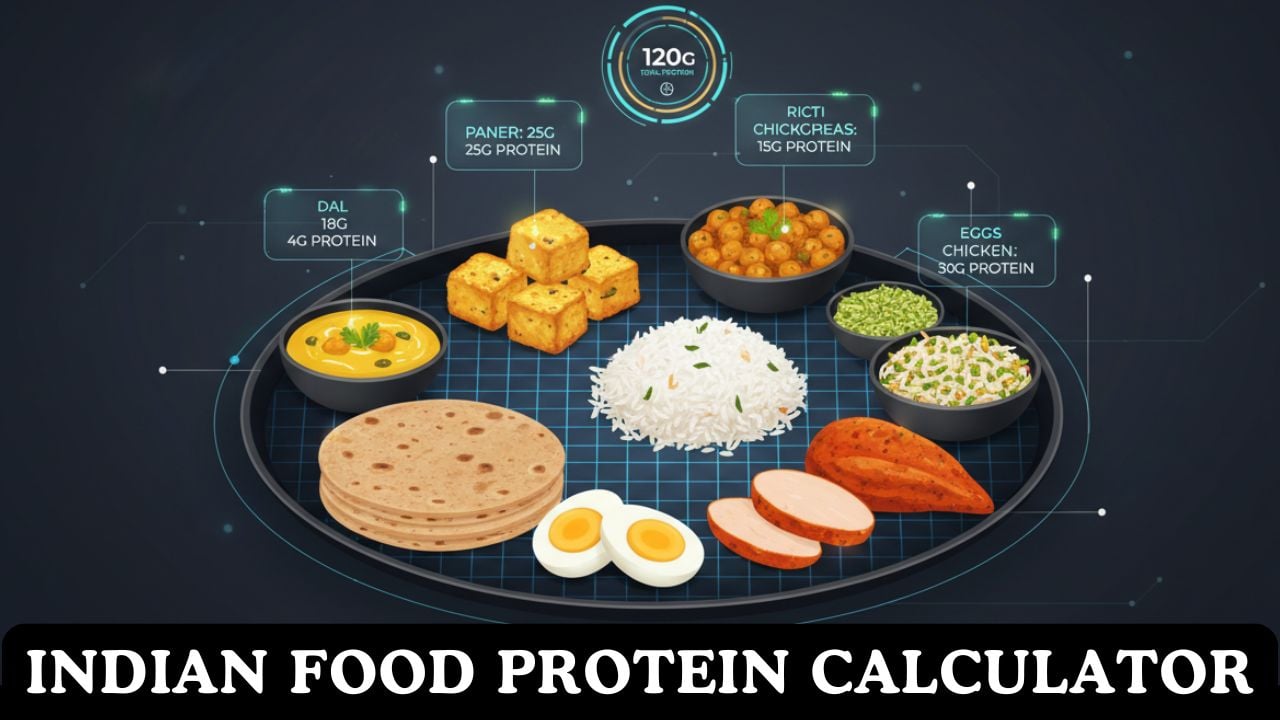
Indian Food Protein Calculator & Content
Protein is essential for muscle repair, immune function, and overall health. Indian cuisine offers diverse protein sources from plant-based dals and legumes to high-quality animal proteins like chicken, fish, and paneer. Understanding protein content helps optimize your diet for fitness goals, whether building muscle or maintaining weight. This calculator provides accurate protein data for 1000+ Indian foods, helping you track daily protein intake effectively. For restaurant protein options, check out Restaurant Calories. Visit Fit Life Regime for comprehensive fitness guidance.
High-Protein Indian Foods Chart
| Protein Source | Protein (100g) | Calories | Type | Region |
|---|---|---|---|---|
| Soya Chunks (Dry) | 52g | 345 | Plant-based | Pan-Indian |
| Soya Chunks (Cooked) | 16g | 110 | Plant-based | Pan-Indian |
| Chicken Breast | 31g | 165 | Animal protein | All regions |
| Paneer | 18.3g | 265 | Dairy protein | North Indian |
| Peanuts | 25.8g | 567 | Plant-based | All regions |
| Almonds | 21.2g | 579 | Plant-based | All regions |
| Fish (Salmon) | 22.1g | 206 | Animal protein | Coastal regions |
| Greek Yogurt | 10.2g | 97 | Dairy protein | All regions |
| Eggs | 12.6g | 155 | Animal protein | All regions |
| Lentils (Dal) | 9g | 116 | Plant-based | All regions |
| Chickpeas | 8.9g | 164 | Plant-based | All regions |
Complete Indian Protein Database
🥩 Animal-Based Protein Foods
| Protein Source | Protein (100g) | Calories | Protein Quality (PDCAAS) | Region |
|---|---|---|---|---|
| Chicken Breast | 31g | 165 | Excellent (0.92) | All regions |
| Chicken Thigh | 26g | 209 | Excellent (0.92) | All regions |
| Fish (Salmon) | 22.1g | 206 | Excellent (0.93) | Coastal |
| Eggs (Whole) | 12.6g | 155 | Excellent (1.0) | All regions |
| Mutton (Goat) | 21.5g | 245 | Excellent (0.92) | North Indian |
| Fish (Rohu) | 18.2g | 97 | Excellent (0.93) | Eastern Indian |
| Prawns/Shrimp | 24g | 99 | Excellent (0.95) | Coastal |
| Beef (Lean) | 26.1g | 250 | Excellent (0.92) | Regional |
🥛 Dairy Protein Sources
| Dairy Product | Protein (100g) | Calories | Calcium (mg) | Region |
|---|---|---|---|---|
| Paneer (Fresh) | 18.3g | 265 | 208 | North Indian |
| Greek Yogurt | 10.2g | 97 | 115 | All regions |
| Cottage Cheese | 12.4g | 72 | 91 | All regions |
| Regular Yogurt | 3.5g | 61 | 121 | All regions |
| Milk (Whole) | 3.3g | 64 | 113 | All regions |
| Skim Milk | 3.4g | 35 | 113 | All regions |
| Cheese (Cheddar) | 25g | 402 | 721 | Regional |
🌱 Plant-Based Protein Foods
| Plant Protein | Protein (100g) | Calories | Fiber (g) | Iron (mg) |
|---|---|---|---|---|
| Soya Chunks (Dry) | 52g | 345 | 13 | 20 |
| Soya Chunks (Cooked) | 16g | 110 | 4 | 6 |
| Peanuts | 25.8g | 567 | 8.5 | 4.6 |
| Almonds | 21.2g | 579 | 12.5 | 3.7 |
| Lentils (Dal) | 9g | 116 | 8 | 3.3 |
| Chickpeas | 8.9g | 164 | 7.6 | 2.9 |
| Kidney Beans | 8.7g | 127 | 6.4 | 2.9 |
| Black Gram (Urad) | 7.5g | 105 | 4.9 | 2.57 |
| Sprouted Moong | 7.5g | 104 | 2.8 | 1.4 |
🍗 Popular Protein Dishes
| Dish | Serving Size | Protein (g) | Calories | Region |
|---|---|---|---|---|
| Butter Chicken | 1 bowl (200g) | 16.5 | 235 | North Indian |
| Tandoori Chicken | 1 leg (100g) | 26 | 195 | North Indian |
| Palak Paneer | 1 bowl (200g) | 8.5 | 165 | North Indian |
| Chicken Biryani | 1 plate (350g) | 18 | 290 | North Indian |
| Chole (Chickpea Curry) | 1 bowl (150g) | 7.2 | 158 | North Indian |
| Sambar | 1 bowl (200g) | 3.8 | 72 | South Indian |
| Fish Curry | 1 bowl (200g) | 18 | 220 | Coastal |
| Mutton Curry | 1 bowl (200g) | 21.5 | 245 | North Indian |
🥜 Nuts & Seeds Protein
| Nut/Seed | Protein (100g) | Calories | Healthy Fats (g) | Usage |
|---|---|---|---|---|
| Pumpkin Seeds | 30.2g | 559 | 49 | Snacking |
| Peanuts | 25.8g | 567 | 49.2 | Snacking/Roasted |
| Almonds | 21.2g | 579 | 49.9 | Snacking/Raw |
| Pistachios | 20.2g | 562 | 45.3 | Snacking |
| Cashews | 18.2g | 553 | 43.8 | Snacking |
| Walnuts | 15.2g | 654 | 65.2 | Snacking |
| Chia Seeds | 16.5g | 486 | 30.7 | Supplements |
| Flax Seeds | 18.3g | 534 | 42.2 | Supplements |
🥦 Protein-Rich Vegetables
| Vegetable | Protein (100g) | Calories | Vitamin C (mg) | Region |
|---|---|---|---|---|
| Spinach (Palak) | 2.9g | 23 | 28 | All regions |
| Broccoli | 2.8g | 34 | 89 | Regional |
| Cauliflower | 1.9g | 25 | 48 | All regions |
| Green Peas | 5.4g | 81 | 40 | All regions |
| Corn | 3.4g | 86 | 6.8 | All regions |
| Potatoes | 2g | 77 | 19.7 | All regions |
| Okra (Bhindi) | 1.9g | 33 | 23 | All regions |
| Tomatoes | 0.9g | 18 | 14 | All regions |
Protein Content by Cooking Method
| Method | Protein Retention | Example | Calories Impact |
|---|---|---|---|
| Boiling | High (90-95%) | Chicken breast, eggs | Low addition |
| Steaming | High (90-95%) | Fish, vegetables | Minimal |
| Grilling/Tandoor | Good (85-90%) | Paneer tikka, chicken | Medium |
| Baking | Good (80-85%) | Fish, paneer | Medium |
| Frying | Moderate (70-80%) | Samosa, pakora | High |
| Deep Frying | Low (60-70%) | Fried chicken | Very high |
Daily Protein Requirements by Age & Activity
Sedentary Adults: 0.8g per kg body weight (56g for 70kg person)
Moderately Active: 1.2-1.4g per kg body weight (84-98g for 70kg person)
Athletes/Bodybuilders: 1.6-2.0g per kg body weight (112-140g for 70kg person)
Pregnant Women: 1.1g per kg body weight (77g for 70kg person)
Older Adults (65+): 1.0-1.2g per kg body weight (70-84g for 70kg person)
Distribution: Spread protein intake across meals for optimal absorption. Aim for 20-30g protein per meal
and 10-15g per snack. Include complete protein sources (animal or complementary plant proteins) for optimal muscle
protein synthesis.
Frequently Asked Questions
How accurate is this protein calculator?
This calculator integrates data from USDA FoodData Central and Indian government nutrition databases, providing accuracy within ±5-10% for most foods. For restaurant protein data, check Restaurant Calories. For detailed protein analysis, use the Chicken Protein & Nutrition Calculator. Actual values may vary based on specific ingredients, cooking methods, and regional recipe variations. For medical nutrition therapy or clinical applications, consult with registered dietitians who can provide personalized assessments.
Which Indian foods are highest in protein?
Top protein sources: Soya chunks dry (52g per 100g; 16g when cooked), chicken breast (31g), peanuts (25.8g), almonds (21.2g), paneer (18.3g), fish (22.1g), eggs (12.6g), Greek yogurt (10.2g), and lentils (9g cooked). These provide high-quality protein essential for muscle repair and growth. Note: Dry soya chunks absorb 3-4x their weight in water during cooking, reducing protein concentration. Vegetarian sources like paneer and soy offer excellent protein quality (PDCAAS 0.9-1.0) comparable to animal proteins.
How much protein do I need daily?
Daily protein needs vary by age, activity level, and goals. Sedentary adults need 0.8g per kg body weight, while athletes require 1.6-2.2g per kg. For a 70kg person: sedentary (56g), moderately active (84-98g), athlete (112-154g). Calculate your needs using our BMR and TDEE calculators and track intake with this protein calculator for optimal results.
Are plant-based proteins complete?
Most plant proteins have lower amounts of one or more essential amino acids compared to animal proteins, but combining sources creates optimal amino acid profiles. Complementary combinations: Dal + rice, lentils + grains, beans + nuts provide all essential amino acids. Important note: Soy protein, quinoa, and amaranth are complete plant proteins on their own with all 9 essential amino acids. Indian cuisine naturally provides these combinations in traditional meals like dal chawal, khichdi, and thali preparations, making vegetarian diets nutritionally complete.
⚕️ Medical Disclaimer
This Indian Food Protein Calculator provides nutritional estimates based on standard food databases and should not replace professional medical or dietary advice. Individual protein needs vary based on age, sex, weight, height, activity level, health conditions, and medications. Nutritional values shown are averages and may differ from actual foods based on ingredients, preparation methods, and regional variations. Consult with registered dietitians, nutritionists, or healthcare professionals before making significant dietary changes, especially if you have kidney disease, liver conditions, or other health concerns. Pregnant and breastfeeding women should seek professional guidance for appropriate protein planning. This tool is for educational and informational purposes only. For personalized nutrition advice, visit Fit Life Regime or consult qualified healthcare professionals.

Manish is a NASM-certified fitness and nutrition coach with over 10 years of experience in weight lifting and fat loss fitness coaching. He specializes in gym-based training and has a lot of knowledge about exercise, lifting technique, biomechanics, and more.
Through “Fit Life Regime,” he generously shares the insights he’s gained over a decade in the field. His goal is to equip others with the knowledge to start their own fitness journey.