
🏃 VO2 Max Runners Calculator
Estimate your aerobic capacity using race times or fitness tests • Get training zones & pace predictions
What is VO2 Max for Runners?
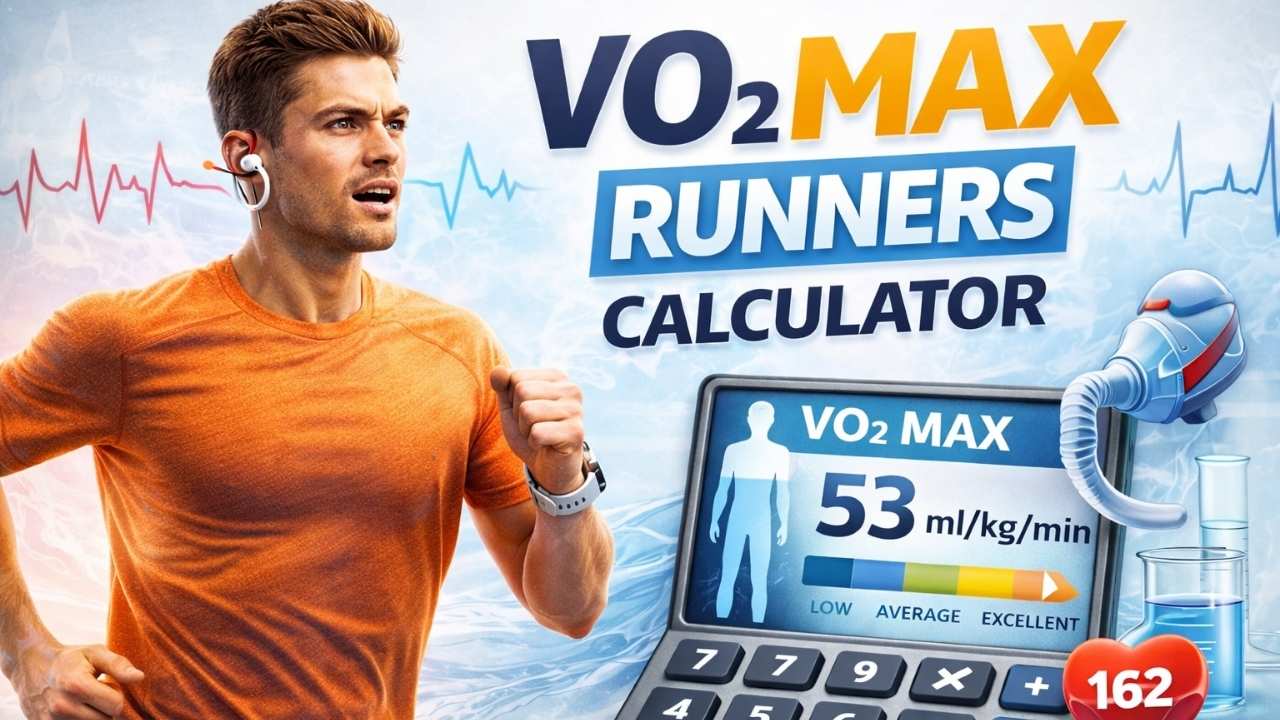
VO2 max (maximal oxygen uptake) measures how much oxygen your body can use during intense exercise. It’s considered the gold standard for measuring cardiorespiratory fitness and aerobic endurance.
For runners, a higher VO2 max typically means better performance potential. Research shows trained male athletes average 52 mL/kg/min compared to 33 mL/kg/min for non-athletes.
Estimation Formulas
Example: A runner covers 3,000 meters in the Cooper test:
VO2 max = (3000 − 504.9) ÷ 44.73 = 55.8 mL/kg/min
This indicates superior aerobic fitness. Based on the estimation tables, this runner could expect a 5K time around 18:15, 10K around 37:50, half marathon around 1:23:40, and a marathon around 2:54.
⚠️ VO2 Max vs VDOT: While this tool estimates VO2 max, race predictions use VDOT methodology. A lab-tested VO2 max of 60 doesn’t always beat a VO2 max of 55 if the latter has better running economy. The race times shown are estimates based on typical running efficiency.
VO2 Max Fitness Classifications
| Classification | Men (mL/kg/min) | Women (mL/kg/min) |
|---|---|---|
| Superior (Athlete) | Above 55 | Above 49 |
| Excellent | 47-55 | 42-49 |
| Good | 39-46 | 35-41 |
| Average | 31-38 | 27-34 |
| Below Average | Below 31 | Below 27 |
Note: Professional/elite athletes typically have VO2 max values of 70-85+ mL/kg/min. Classifications above are based on ACSM guidelines for general population fitness levels.
Frequently Asked Questions
How accurate are these VO2 max estimates?
Field tests like the Cooper test typically have an error margin of ±10-15%. Race-based estimates using VDOT methodology are generally more accurate for trained runners. Laboratory testing remains the gold standard.
What’s a good VO2 max for recreational runners?
For recreational runners, 40-50 mL/kg/min for men and 35-45 mL/kg/min for women indicates solid aerobic fitness. Competitive club runners typically range from 50-60 mL/kg/min, while professional marathon runners often exceed 70-85 mL/kg/min.
Can I improve my VO2 max?
Yes! Research shows VO2 max can improve 10-20% with proper training. High-intensity interval training (HIIT) and tempo runs are particularly effective for boosting aerobic capacity.
How does age affect VO2 max?
VO2 max naturally declines about 1% per year after age 25-30. However, regular endurance training can significantly slow this decline.
💡 Training Tips for Improving VO2 Max
Include 1-2 high-intensity sessions per week (intervals at 90-95% max HR). Combine with longer easy runs for base building. Track your progress by re-testing every 8-12 weeks. Consistency is key – improvements take 6-8 weeks to become measurable. For structured running programs, explore running guides to optimize your training.
Assessment of VO2 Max in Athletes (Cureus, 2024) • Exercise Training and VO2 Max (Heliyon)

Manish is a NASM-certified fitness and nutrition coach with over 10 years of experience in weight lifting and fat loss fitness coaching. He specializes in gym-based training and has a lot of knowledge about exercise, lifting technique, biomechanics, and more.
Through “Fit Life Regime,” he generously shares the insights he’s gained over a decade in the field. His goal is to equip others with the knowledge to start their own fitness journey.