
Cooking Calories Burned Calculator
Calculate calories burned during kitchen activities using scientifically validated MET values
How Many Calories Does Cooking Burn?
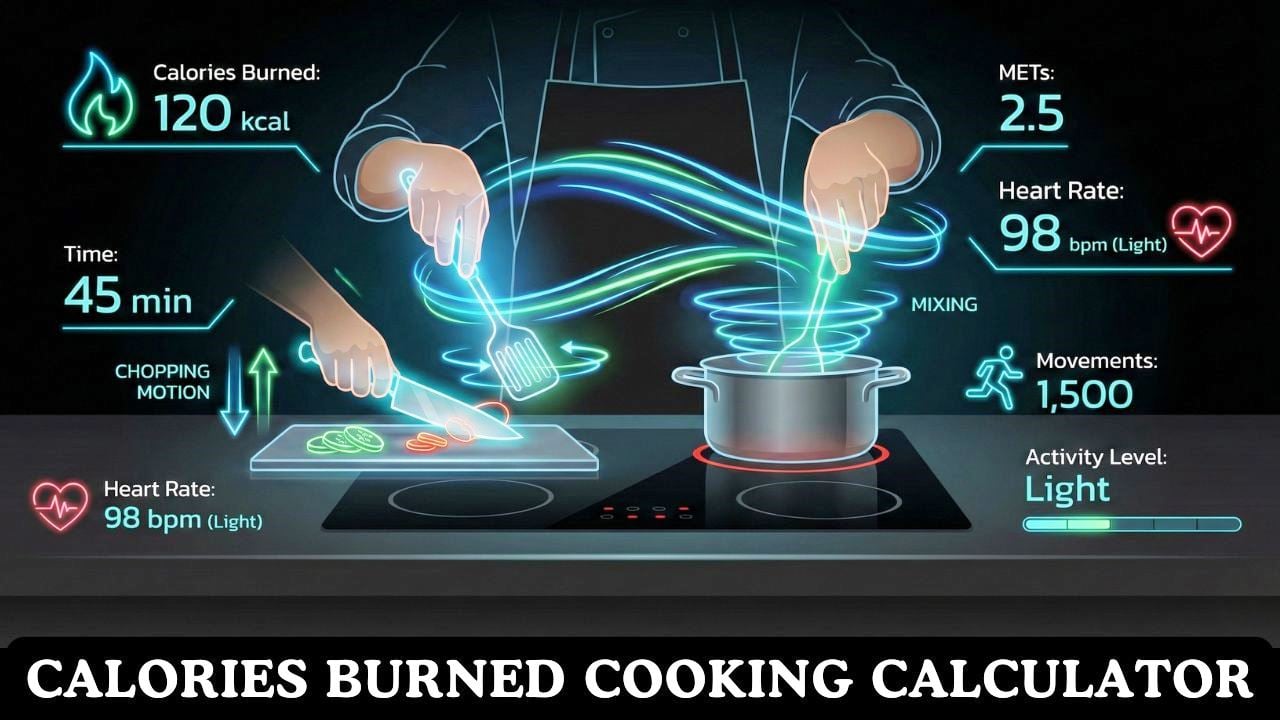
Cooking burns between 70-250 calories per hour depending on your activity level, the complexity of meals prepared, and your body weight. A typical 30-minute cooking session for a moderately active home cook burns approximately 50-100 calories. While cooking may seem like a sedentary activity, standing, moving around the kitchen, chopping, stirring, and managing multiple dishes simultaneously requires continuous physical engagement.
According to the Compendium of Physical Activities, cooking activities range from 2.0 to 4.0 METs (Metabolic Equivalents), placing them in the light to moderate intensity category. This makes cooking a meaningful contributor to your daily Non-Exercise Activity Thermogenesis (NEAT), which plays a crucial role in overall energy expenditure and fitness.
Factors that increase calorie burn while cooking:
- Standing vs. sitting: Standing burns 20-50% more calories than seated prep work
- Kitchen layout: Larger kitchens require more walking between stations
- Meal complexity: Multi-course meals keep you moving continuously
- Active techniques: Hand-mixing, kneading dough, and chopping require muscle engagement
- Cleanup inclusion: Washing dishes and tidying adds significant activity
Understanding the Cooking Calorie Formula
This calculator uses the standard MET-based formula endorsed by exercise physiologists worldwide. The MET (Metabolic Equivalent of Task) system measures the energy cost of physical activities relative to resting metabolism.
Calculation: (3.3 × 3.5 × 70) ÷ 200 = 4.04 calories per minute
Total: 4.04 × 45 = 182 calories burned
The calculator applies additional multipliers for kitchen setup, meal complexity, and cleanup activities to provide more accurate personalized estimates. These adjustments are based on research into how different cooking environments and tasks affect energy expenditure.
Why Home Cooking Benefits Your Fitness
Beyond the direct calorie burn, cooking at home supports your overall fitness goals in multiple ways:
- NEAT contribution: Regular cooking adds 150-400+ calories to daily expenditure
- Nutritional control: Home-cooked meals typically contain fewer processed ingredients
- Portion awareness: Cooking yourself increases mindfulness about serving sizes
- Active lifestyle: Kitchen time replaces sedentary activities like watching TV
- Standing time: Extended standing improves posture and core strength
MET Values for Kitchen Activities
The MET values used in this calculator come directly from the Compendium of Physical Activities, the gold standard reference for physical activity energy expenditure research. Understanding these values helps you appreciate how different cooking tasks compare in terms of calorie burn.
Official MET Values for Cooking Activities:
- 2.0 MET: Light cooking, standing or sitting, using manual appliances
- 2.3 MET: Cooking with walking, serving food, setting table
- 3.3 MET: Kitchen activity general, moderate effort (cooking, washing dishes, cleaning)
- 3.5 MET: Cooking or food preparation, moderate effort
- 4.0 MET: Intensive cooking tasks like tanning hides, laundry with moderate effort
For comparison, sitting quietly equals 1.0 MET, walking at a moderate pace equals 3.5 MET, and light housework equals 2.5-3.5 MET. This places active cooking in the same calorie-burning category as light exercise.
Comparing Cooking to Other Daily Activities
To put cooking calorie burn in perspective, here’s how kitchen time compares to other common activities for a 70 kg (154 lb) person over 30 minutes:
- Active Cooking (3.5 MET): ~100 calories — Similar to slow walking
- Sitting at Desk (1.5 MET): ~45 calories — Much lower energy use
- Light Housework (2.5 MET): ~75 calories — Comparable to simple cooking
- Vacuuming (3.0 MET): ~90 calories — Slightly less than cooking
- Walking (3.5 MET): ~100 calories — Same as moderate cooking
- Light Yoga (2.5 MET): ~75 calories — Less than active cooking
This comparison shows that cooking is a legitimate form of light physical activity. For those looking to increase daily movement without structured exercise, spending more time in the kitchen is a practical strategy.
Frequently Asked Questions
How accurate is this cooking calorie calculator?
This calculator uses the scientifically validated MET formula and official values from the Compendium of Physical Activities. Individual results may vary by ±10-20% based on factors like metabolism, exact movement patterns, and cooking style. The calculator provides reliable estimates suitable for tracking daily activity and supporting fitness goals.
What cooking activities burn the most calories?
Activities that keep you moving continuously burn the most: holiday meal preparation involving multiple dishes, baking from scratch with kneading and rolling, meal prepping for the week, and cooking in large or professional kitchens that require significant walking. Adding cleanup to your cooking session can increase total calorie burn by 20-30%.
How does body weight affect calories burned cooking?
Heavier individuals burn more calories during any physical activity, including cooking. This is because moving a larger body mass requires more energy. A 90 kg person burns approximately 30% more calories cooking than a 70 kg person performing the same tasks for the same duration. The calculator automatically adjusts for your weight to provide personalized estimates.

Manish is a NASM-certified fitness and nutrition coach with over 10 years of experience in weight lifting and fat loss fitness coaching. He specializes in gym-based training and has a lot of knowledge about exercise, lifting technique, biomechanics, and more.
Through “Fit Life Regime,” he generously shares the insights he’s gained over a decade in the field. His goal is to equip others with the knowledge to start their own fitness journey.