
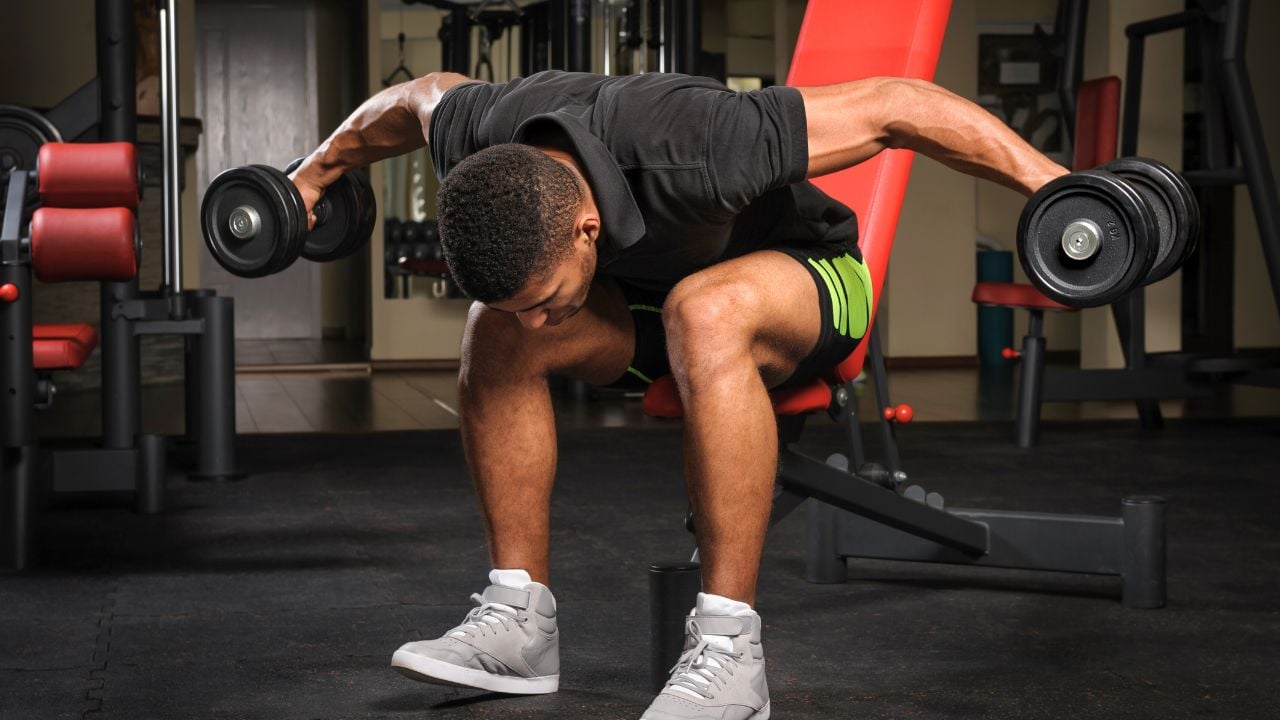
The bent-over reverse dumbbell fly is an isolation exercise performed by hinging forward at the hips and raising two dumbbells out to the sides in a wide arc, like opening a pair of wings. It’s the mirror image of the standard chest fly: instead of bringing the arms together in front of the body, you pull them apart behind it.
That single difference in direction is what makes it valuable. Most pressing and pushing movements, bench press, shoulder press, push-ups, bias the front of the shoulder.
The reverse fly is one of the few common exercises that directly targets the back of the shoulder and the muscles between the shoulder blades. This is exactly the area that tends to lag behind in lifters who press more than they pull.
Reverse fly increases deltoid muscle definition and strength. It primarily works the upper back muscles, specifically the rhomboids, rear deltoids, and traps
- Reverse Dumbbell Fly Muscles Worked
- How To Do Bent Over Reverse Dumbbell Fly
- Tips and Techniques
- Reverse Dumbbell Fly Variations
- 1. Seated Dumbbell Reverse Fly
- 2. Incline Dumbbell Reverse Delt Fly
- 3. Head-supported Bent Over Reverse Dumbbell Fly
- 4. One Arm Dumbbell Reverse Fly
- Add Reverse Fly Into Your Workout Routine
- I. During Shoulder Workout
- II. During Pull workout Split
- III. During upper body workout
- FAQs
- Is dumbbell reverse fly effective?
- Why is reverse fly so hard?
- Do reverse flies work lats?
- Can the reverse dumbbell fly help improve posture?
- Can beginners do the reverse dumbbell fly exercise?
- References
Reverse Dumbbell Fly Muscles Worked
The reverse fly is a horizontal abduction movement, the arms travel out and back from in front of the body. That specific motion determines which muscles do the work, and which ones are along for the ride.
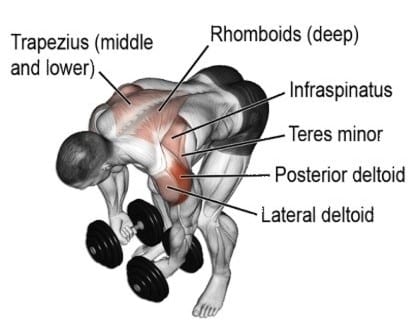
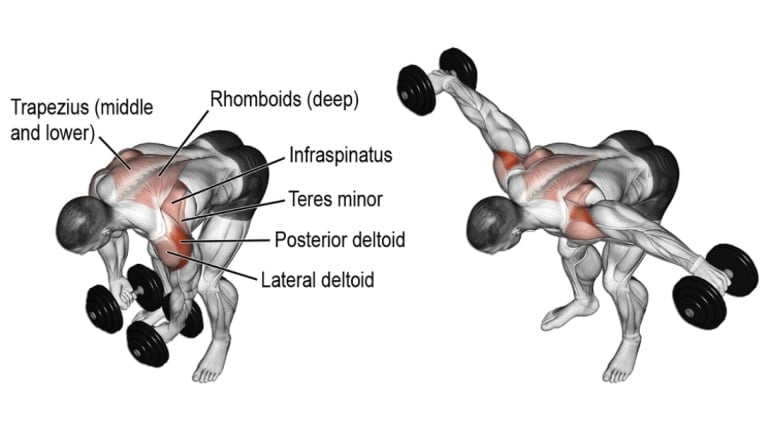
The primary muscles worked during the reverse dumbbell fly are: Rear deltoids, Rhomboids and Trapezius
In addition to the primary muscles, the reverse dumbbell fly also engages several secondary muscles, including the:
- Rotator cuff muscles
- Biceps
- Forearms
- Lateral deltoid,
- Infraspinatus
- Teres minor, teres major.
How To Do Bent Over Reverse Dumbbell Fly
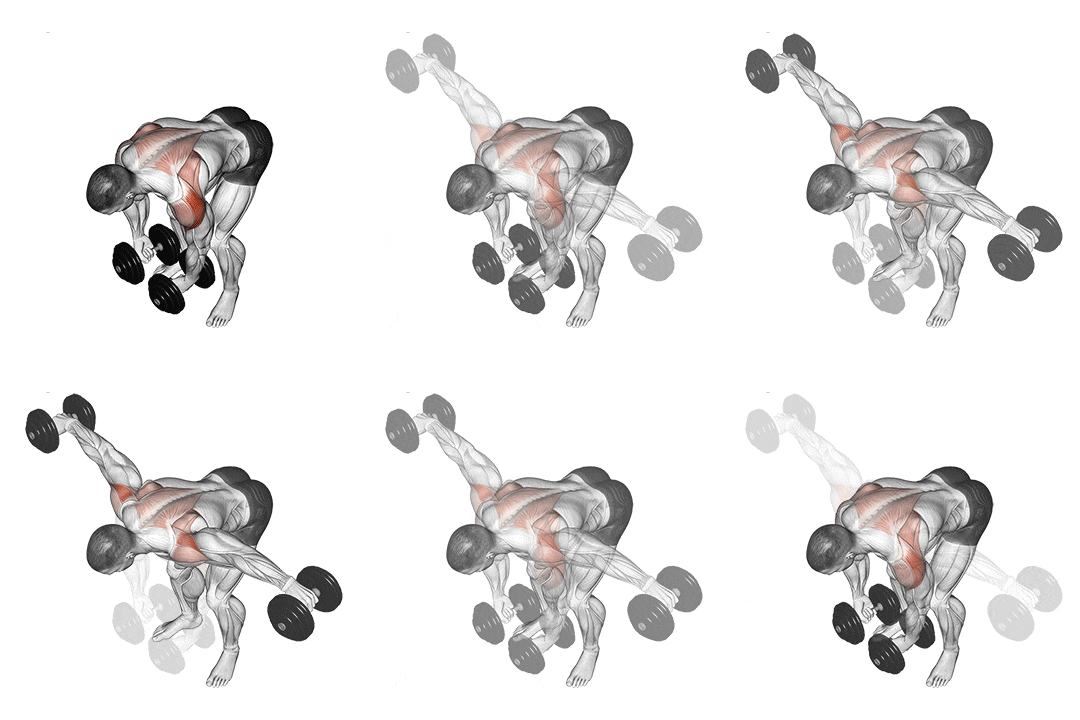
- Stand with your feet shoulder-width apart and hold a dumbbell in each hand with a neutral grip (palms facing each other).
- Push your hips back and lower your torso until it’s close to parallel with the floor, keeping a flat back and a soft bend in the knees. Let the dumbbells hang directly below your shoulders.
- Pull your shoulder blades down away from your ears and tighten your core. This is what keeps your lower back out of the movement.
- Keep a slight, fixed bend in your elbows and lift the weights in a wide arc until your arms are roughly in line with your torso, about shoulder height. Lead with your elbows, not your hands.
- At the top, focus on pulling your shoulder blades together rather than pulling your shoulders up toward your ears.
- Take 2–3 seconds to bring the dumbbells back to the start. The lowering phase is where most of the muscle-building stimulus happens, don’t let gravity do it for you.
Tips and Techniques
- Keep your core tight, chin tucked, and back straight to protect your spine.
- Start light and focus on controlled movement. If you can’t maintain good form, reduce the weight.
- Avoid swinging the weights, instead lift with control, squeezing your shoulder blades together at the top
- Don’t raise your arms too high.
- Maintain a neutral neck position to avoid strain.
- Keep your core braced and avoid arching your lower back.
- Keep your elbows slightly bent to protect your elbow joints.
- Exhale as you lift, inhale as you lower the dumbbells.
- As you get stronger, gradually increase the weight or add more repetitions.
Note:
A study found that a neutral grip on the reverse fly is more effective than a pronated grip for targeting the posterior deltoid and infraspinatus muscles. So Also try neutral or hammer grip reverse fly.
Reverse Dumbbell Fly Variations
Adding variations to the reverse fly dumbbell exercise is important because they can add variety to your workout routine, target different muscles, and challenge your body in new ways.
It helps prevent plateaus in your progress and continue to see improvements.
For example,
- Standing reverse fly: Requires no bench, making it more accessible.
- Bent-over reverse fly: Emphasizes the lower traps for a targeted workout.
- One-arm variations with head supported: Offer a greater challenge for advanced lifters.
1. Seated Dumbbell Reverse Fly
The seated position eliminates the need to balance and stabilize the body as you do in standing or bent-over variations.
This allows for greater focus on isolating the rear deltoids and upper back muscles.
This is particularly beneficial for beginners or those with limited core strength.
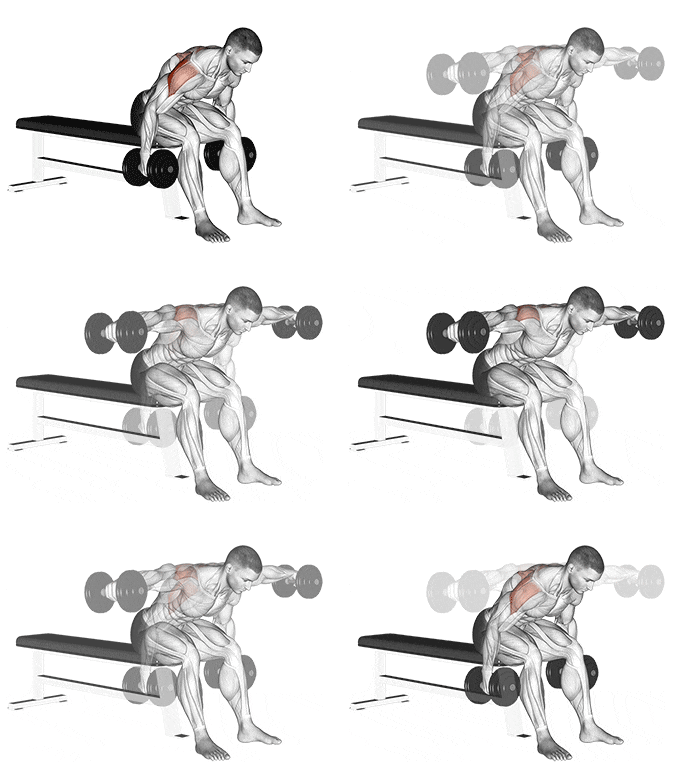
How To Do
- Sit on the bench or chair with your feet firmly planted on the ground.
- Hold a dumbbell in each hand with your palms facing inward.
- Lean forward and let the dumbbells hang at arm’s length below your shoulders.
- Exhale and lift the dumbbells to your sides
- Pause at the top of the movement and then slowly lower the dumbbells back down to the starting position.
Tips
- Your arms should be parallel to your shoulders.
- Keep strict form to isolate the rear delts.
- Be sure to keep your core engaged to avoid strain on your lower back.
2. Incline Dumbbell Reverse Delt Fly
The incline position emphasizes the rear deltoids more than other variations. It also trains the lateral deltoid muscles.
This exercise targets such small muscles, that’s why it is usually performed with lightweight for high reps (10–15 reps).
The incline reverse fly offers support for the lower back. This makes it a good choice for people with lower back issues.
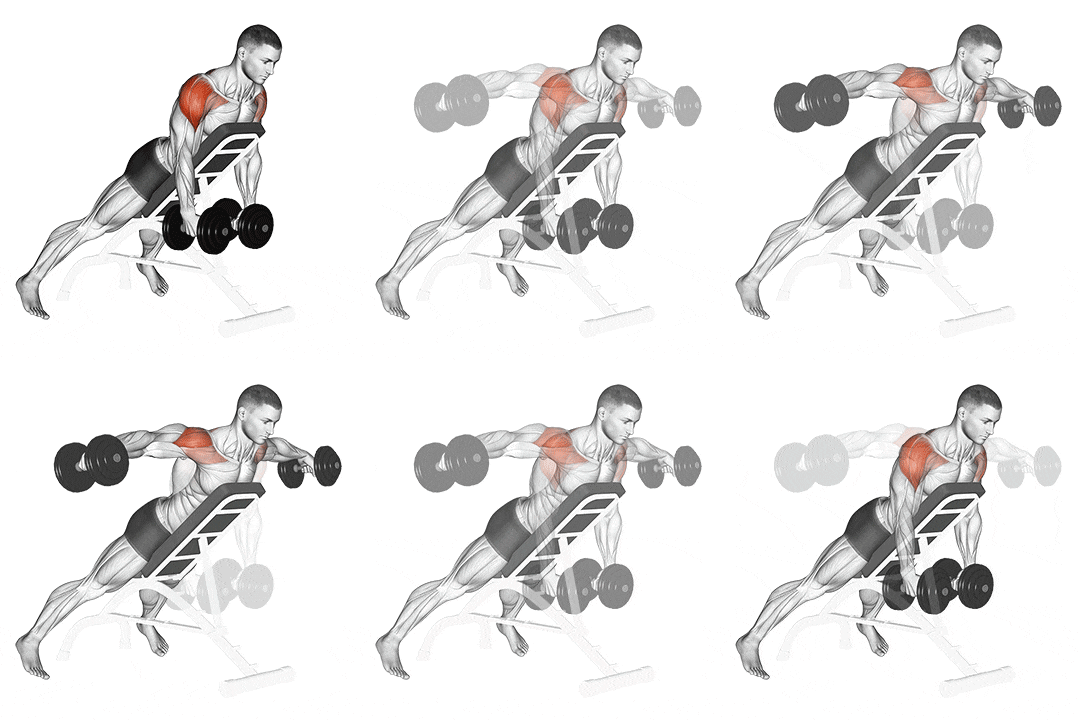
How To Do
- Set up an incline bench at a 45-degree angle and grab a pair of dumbbells.
- Lie facedown on the bench with your chest against the pad and feet flat on the floor.
- Hold the dumbbells so that they hang straight down from your shoulders.
- Slowly lift the dumbbells up and out to the sides of your body.
- Then, slowly lower the weights back up to the starting position.
Tips
- Set a bench at about 30–45 degrees inclined.
- Keep form strict to isolate the rear delts.
3. Head-supported Bent Over Reverse Dumbbell Fly
Since your body is stable, you can’t use other muscles like swinging your arms or using your back muscles to help. This ensures the rear deltoid and trapezius muscles are doing the work.
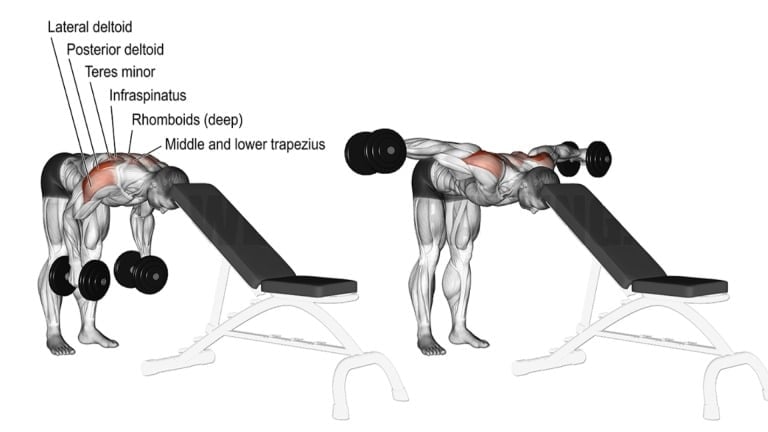
How To Do
- Hold dumbbells in each hand and bend at the hips.
- Rest your forehead on the edge of the bench.
- Your back should be straight, and your arms should be hanging in front of you.
- Lift both arms until the dumbbells are at shoulder height.
- Hold for a count of two, then slowly lower the dumbbells back to the starting position.
Tips
- Do not swing the dumbbells upward. Keep your back straight and your body still.
- Keep your body still. Only your arms should move.
4. One Arm Dumbbell Reverse Fly
One Arm Dumbbell Bent Over Reverse Fly is a strength exercise that works your traps and rear deltoids.
When done properly, the move can effectively target the neck, shoulders, upper back, and upper body.
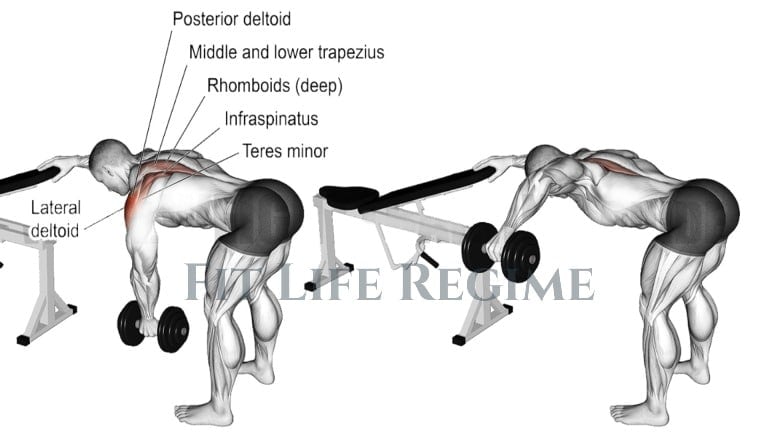
How To Do
- In one hand, hold a dumbbell and bend at the hips and knees until your torso is parallel to the floor.
- For stability, grasp something stable with your free hand.
- The arm with the dumbbell should hang down in front of you.
- Lift the dumbbell straight out to the side until it’s level with your shoulder height.
- Slowly lower the dumbbells to the starting position.
Add Reverse Fly Into Your Workout Routine
Here are some tips for adding this exercise to your workouts:
- Add the Optimum No. of Sets And Reps: A good starting point is to perform 3–4 sets of 8–12 reps. However, you can adjust the number of sets and reps according to your fitness level and goals.
- During Workout Splits.: You can perform dumbbell reverse fly as part of an upper body or during Push Pull Leg Workout Split.
- Frequency: You can do dumbbell delt flys once or twice a week. However, allowing your muscles to recover between workouts is important to maximize results.
I. During Shoulder Workout
| S.NO | Exercise | Sets | Reps |
|---|---|---|---|
| 1 | Seated Dumbbell Shoulder Press | 3-4 | 8-12 |
| 2 | Standing Dumbbell Lateral Raise | 3-4 | 10-15 |
| 3 | Reverse Fly | 3 | 10-12 |
| 4 | Front Plate Raise | 3 | 12-15 |
| 5 | Upright Row | 3 | 10-12 |
II. During Pull workout Split
| S.NO | Exercise | Sets | Reps |
|---|---|---|---|
| 1 | Pull-Ups | 3-4 | 8-10 |
| 2 | Bent Over Barbell Rows | 3-4 | 8-10 |
| 3 | Bent Over Reverse Fly | 3 | 10-12 |
| 4 | Bicep Curls (with dumbbells or barbell) | 3 | 12-15 |
| 5 | Hammer Curls | 3 | 10-12 |
| 6 | Cable Face Pulls | 3 | 12-15 |
III. During upper body workout
| S.NO | Exercise | Sets | Reps |
|---|---|---|---|
| 1 | Bench Press (with barbell or dumbbells) | 3-4 | 8-10 |
| 2 | Seated Dumbbell Shoulder Press | 3-4 | 8-12 |
| 3 | Reverse Fly | 3-4 | 10-12 |
| 4 | Lat Pulldowns (with machine or bar) | 3-4 | 10-12 |
| 5 | Cable Tricep Pushdowns | 3 | 12-15 |
| 6 | Bicep Curls (with dumbbells or barbell) | 3 | 12-15 |
FAQs
Is dumbbell reverse fly effective?
Yes, dumbbell reverse fly is an effective exercise for targeting the muscles of the upper back and shoulders, particularly the rear deltoids, rhomboids, and traps.
It can help improve upper body strength and posture.
Why is reverse fly so hard?
The reverse fly can be challenging because it targets the often-neglected muscles of the upper back and shoulders, which may not be as strong as other muscles.
It also requires proper form and control to engage these muscles effectively, which may take time and practice to develop.
Do reverse flies work lats?
Reverse flies primarily work the muscles of the upper back and shoulders, including the rear deltoids, rhomboids, and traps.
Although the lats are not the primary muscle targeted during the reverse fly, they may be indirectly engaged as stabilizers during the movement.
Can the reverse dumbbell fly help improve posture?
Yes, the reverse dumbbell fly can help improve your posture by strengthening the muscles in your upper back, which helps support proper alignment of the shoulders and spines.
Can beginners do the reverse dumbbell fly exercise?
Yes, beginners can do the reverse dumbbell fly exercise.
But it’s important to start with lighter weights and focus on good form.
References
- Atalay E, Akova B, Gür H, Sekir U. Effect of upper-extremity strengthening exercises on the lumbar strength, disability and pain of patients with chronic low back pain: a randomized controlled study. J Sports Sci Med. 2017;16(4):595-603. PMID:29238262
- Bergquist R, Iversen VM, Mork PJ, Fimland MS. Muscle Activity in Upper-Body Single-Joint Resistance Exercises with Elastic Resistance Bands vs. Free Weights. J Hum Kinet. 2018 Mar 23;61:5-13. doi: 10.1515/hukin-2017-0137. PMID: 29599855; PMCID: PMC5873332.
- Schoenfeld B, Sonmez RG, Kolber MJ, Contreras B, Harris R, Ozen S. Effect of hand position on EMG activity of the posterior shoulder musculature during a horizontal abduction exercise. J Strength Cond Res. 2013 Oct;27(10):2644-9. doi: 10.1519/JSC.0b013e318281e1e9. PMID: 23302754.

Manish is a NASM-certified fitness and nutrition coach with over 10 years of experience in weight lifting and fat loss fitness coaching. He specializes in gym-based training and has a lot of knowledge about exercise, lifting technique, biomechanics, and more.
Through “Fit Life Regime,” he generously shares the insights he’s gained over a decade in the field. His goal is to equip others with the knowledge to start their own fitness journey.