
Hansons Training Calculator
Calculate your optimal marathon training paces using the Hansons Method cumulative fatigue approach
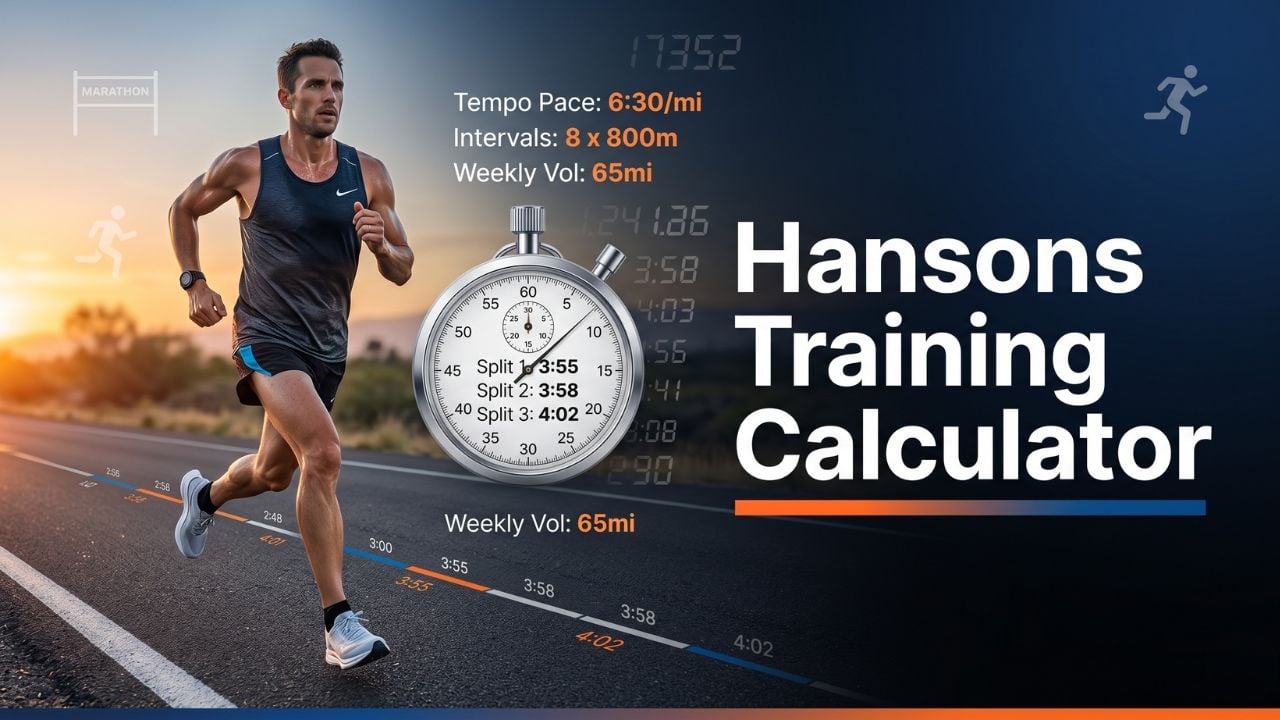
Understanding the Hansons Marathon Method
The Hansons Marathon Method, developed by Keith and Kevin Hanson, revolutionized marathon training with its cumulative fatigue philosophy. Unlike traditional approaches that emphasize 20+ mile long runs, the Hansons Method caps long runs at 16 miles while focusing on consistent, quality training throughout the week to simulate running on tired legs—exactly what happens in the final miles of a marathon.
This approach has produced elite runners and helped thousands of recreational marathoners achieve personal bests. The method emphasizes consistent training with specific paces for each workout type, ensuring you develop both the aerobic base and speed necessary for marathon success.
The Hansons Training Paces (Correct Terminology)
⚡ Speed Pace (5K-10K): Run at your 5K-10K race effort—approximately 8-12% faster than marathon pace.
Used for 400m-1200m interval repeats during weeks 1-9 to build VO2max and running economy.
💪 Strength Pace: Run 10 seconds faster than marathon pace. Used for mile repeats during
weeks 10-16 to improve lactate threshold and
muscular endurance.
🏅 Tempo Pace (= Goal Marathon Pace): This is THE key Hansons definition. In the Hansons Method,
“Tempo” means running at EXACTLY your goal marathon pace—not lactate threshold. These runs teach race-day pacing and mechanics.
🛤️ Long Run Pace: Run 30-60 seconds slower than marathon pace. Hansons long runs (capped at 16 miles)
are faster than traditional plans because you’re running on cumulative fatigue, simulating miles 10-26 of race day.
🌿 Easy/Recovery Pace: Run 60-120 seconds slower than marathon pace. These runs build aerobic base
and promote recovery. They should feel comfortable enough to hold a conversation.
⚠️ Important: In the Hansons Method, “Tempo” does NOT mean lactate threshold pace. It specifically means Goal Marathon Pace. This is a common source of confusion when comparing to other training systems.
Hansons Pace Formulas
Training Phase Guidelines
| Phase | Duration | Focus | Key Workouts |
|---|---|---|---|
| Base Building | Weeks 1-6 | Aerobic foundation | Easy runs, strides, building mileage |
| Strength | Weeks 7-12 | Lactate threshold | Tempo runs, strength workouts |
| Speed | Weeks 13-16 | VO2max & economy | Intervals, speed workouts |
| Taper | Final 10 days | Recovery & freshness | Reduced volume, race prep |
Note: The Hansons Method emphasizes quality over quantity. Each phase builds on the previous one, creating cumulative fitness adaptations that peak on race day. Learn more about leg strengthening exercises to complement your running training.
Frequently Asked Questions
Why are Hansons long runs shorter than traditional plans?
The Hansons Method caps long runs at 16 miles because you’re running them on cumulative fatigue from the week’s training. Running 16 miles on already-tired legs simulates running miles 10-26 of the marathon, providing similar physiological benefits without the increased recovery time and potential for overuse.
What is cumulative fatigue?
Cumulative fatigue means you never fully recover between runs. This simulates the fatigue you’ll experience in the later miles of the marathon, teaching your body to perform when tired. The method uses strategic training to build fatigue throughout the week while maintaining workout quality.
How do I adjust paces for hot weather?
Add 10-20 seconds per mile for warm conditions (60-85°F). The calculator automatically adjusts your training paces based on conditions. Focus on effort level rather than exact pace during hot weather, and ensure adequate hydration and core fitness.
Can beginners use the Hansons Method?
Yes, but with modifications. The Hansons Just Finish program is designed for first-time marathoners, with reduced mileage and more conservative pacing. The calculator adjusts paces based on experience level to ensure appropriate training intensity for all runners.
Why does Hansons use different terminology for “Tempo”?
In the Hansons Method, “Tempo” specifically means running at Goal Marathon Pace—not lactate threshold. This differs from other training systems where “tempo” means threshold pace. The Hansons “Strength” workouts (MP minus 10 seconds) serve a similar purpose to traditional threshold training, while “Speed” workouts at 5K-10K pace build VO2max.
⚠️ Important Notice
This Hansons Training Calculator provides general guidelines based on the Hansons Marathon Method principles and is intended for educational purposes only. Individual responses to training vary based on fitness level, running history, and personal factors. The calculated paces are starting points that may need adjustment based on how your body responds. Consult with a qualified running coach for personalized training plans. Listen to your body and modify training as needed to prevent overtraining.

Manish is a NASM-certified fitness and nutrition coach with over 10 years of experience in weight lifting and fat loss fitness coaching. He specializes in gym-based training and has a lot of knowledge about exercise, lifting technique, biomechanics, and more.
Through “Fit Life Regime,” he generously shares the insights he’s gained over a decade in the field. His goal is to equip others with the knowledge to start their own fitness journey.